
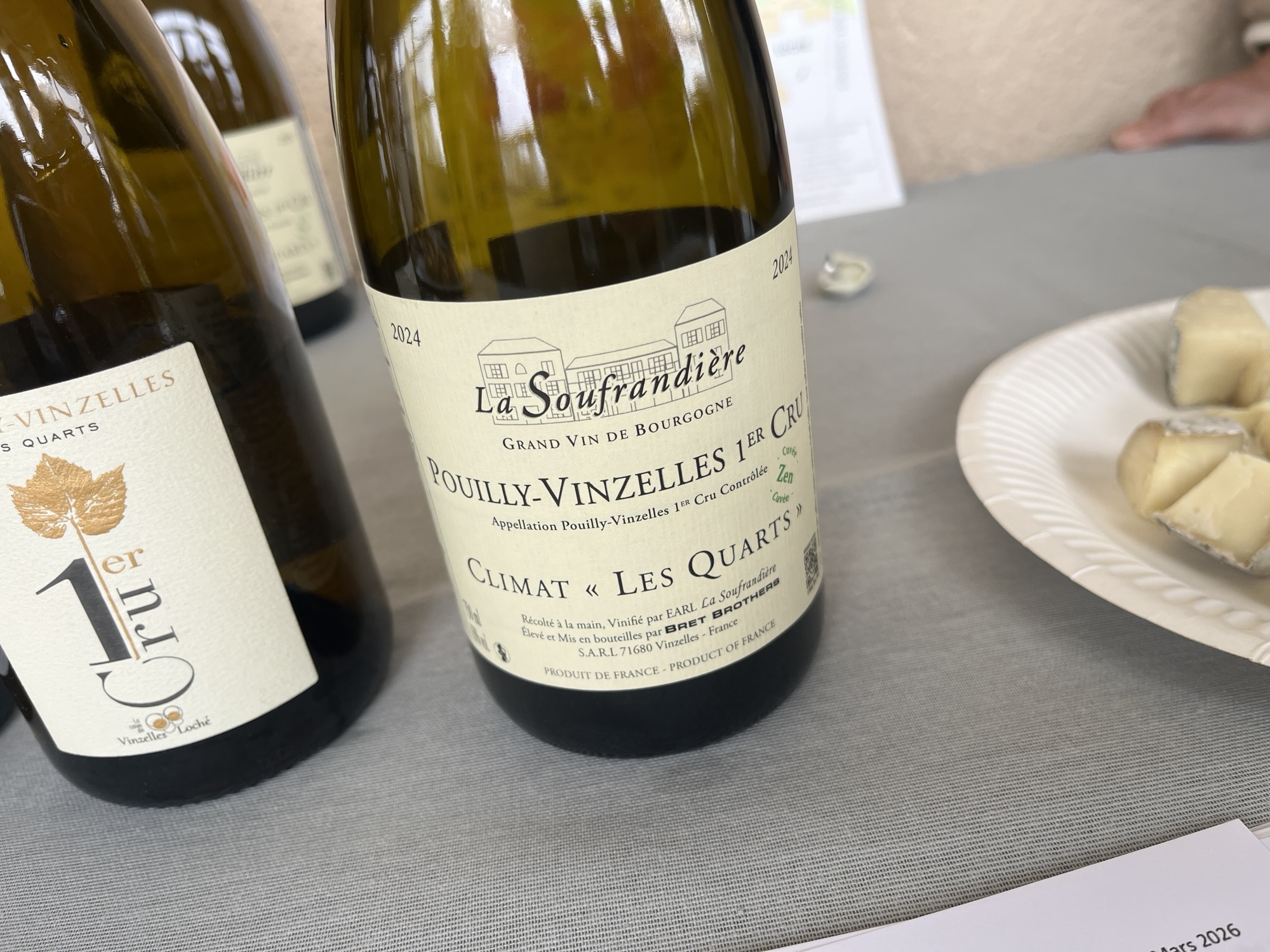
The Mâconnais may as well be on a different planet.
Here in Australia, we consistently lose our shit over the best Chardonnay from Burgundy’s hotspots of Chablis and the Côte d’Or, with oceans of love for Meursault, Montrachet, etc. But wine from the Mâconnais, aka the hills that mark the southern end of the region? For many, it’s just not Burgundy. Instead, the Chardonnay (and the odd Gamay or Pinot Noir) from these hills are treated more as a source of value – an insider’s choice for Burgundian bargains, but hardly top quality, despite the storied history of appellations like Pouilly-Fuissé and the impressive-looking, limestone soil terroirs.
You could argue that it’s a point-of-difference thing. We do sunny, ripe Chardonnay in this brown land, which renders the more typically rounded expressions of the Mâconnais a bit redundant. You could also argue that not enough of the really great wines reach Australian shores (although that’s not accurate given that makers like La Soufrandière land locally). I’ll also accept that this end of Burgundy is known for simple wines rather than profundity, which counts against anyone taking it seriously.
Whatever the justification, the Mâconnais is still Burgundy frontier land, which only makes the haul of impressive wines tasted at this year’s Grand Jours de Bourgogne another reminder of the gold out there.
Not that anyone should be surprised. There’s a dynamism in the Mâconnais you don’t necessarily see in other parts of Burgundy. I feel like the lack of really defined regional characters gives a bit more freedom with style. There are more natural wines here, more winemaking variation, less adherence to a theme, and more young/emerging producers.
The biggest showpiece? 2024 Pouilly-Fuissé. As I mentioned in my Chablis report, 2024 was a pretty challenging harvest in the northern end of Burgundy, but in this warmer southern end, 200km further south, the impacts weren’t quite as harsh. The extra tightness and acid shape, instead, delivered some fantastic wines, especially from Pouilly-Fuissé.
Of course, this story isn’t all smiles and high fives. For every brilliant Mâcon-Villages, there’s a lumpy Saint-Véran (which happened all too often – why?) or yet another wine that either tastes like overripe peach/pineapple juice or some of the terrible unwooded Chardonnay wines of Australia circa 2001, with a giant chasm between the great wines and the rest.
The Mâconnais’ reputation for sunny Burgundy is a bit of a poisoned chalice like that, with winemakers leaning on flavour generosity at the cost of shape and vitality. That’s a broad generalisation, sure, yet some of these whites would definitely be better with half a baume less ripeness (and better-quality oak).
Anyway, I’m rambling. Should we take a look at a few wines?
As with all the reviews in this series, I need to put a scoring disclaimer in before we start. You can only really compare my scores with equivalent Burgundies. That’s it. I apologise for the lack of context around these wines.
Meanwhile, you can read the whole series via the Grand Jours link here.
Wines I really liked:

Subscribe to keep reading
This is not a paywall. Subscribe for free and you get email updates and I keep AI out.

2 responses to “All the Mâconnais hits (and misses) from the Grand Jours de Bourgogne 2026”