
 |
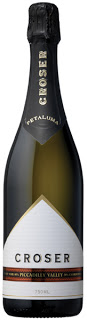
| Croser LD 2000 So very close! |
Petaluma Croser Late Disgorged 2000
12.5%, Cork, $56
Source: Sample
www.petaluma.com.au
I’d like to start this tasting note by talking about acidity. Skip ahead a few paragraphs to just read the review (particularly if you couldn’t be bothered with my sparkling rambles) or otherwise read on.
Historically (I’m talking Champagne here), sufficient acidity was typically achieved in sparkling wines by growing grapes in typically very cool climes (on lean soils) and picking fruit early (when the grapes are just on the cusp of phenological ripeness, just before the natural acidity drops off and sugars increase) and then fermented with very neutral yeasts. This acidity was then balanced out in the wine itself by judicious sweetness additions (dosage), winemaking techniques (bottle and yeast lees ageing) and careful blending (including the use of older reserve wines).
More recently though we’ve seen a sparkling evolution away from this formula, as more producers grow grapes in less cool climes (from BD and organic vineyards), pick grapes later and riper, bottle with low or zero-dosage and focus solely on producing vintage wines, with a singular goal of producing more interesting (and better) sparkling wines, a goal which (I’d argue) has been absolutely met.
Yet in the same breath I’d also argue that in Australia we’re still attempting to really succeed at this evolved style. Unquestionably we make some solid traditionally styled wines, and indeed we’ve recently made some bloody good Champagne quality wines, yet we’re still a long way behind the curve. (With exceptions – Hanging Rock for one).
Which brings me to this Croser. A zero dosage, late disgorged vintage sparkling that spent a total of nine massive years on lees, it’s pretensions are aimed squarely at top draw vintage Champagne, with a price that sits closer to the lower end of non vintage Champagne. Sound thinking there no doubt.
From a pure production point of view it’s certainly properly made too. Barrel fermented with (Petaluma’s own yeast) in old oak and clarified only using gravity, before being laid down for a nine year sleep. Sounds great.
In fact, the intentions are all bloody good with this wine, the extended ageing giving yeasty, toasty, golden richness (though not much autolysis breadiness, which is quite surprising) and no shortage of flavour. It’s got some nice complexity too, the extra age giving it plenty of (clinical) flavour layers to show off.
In the same breath however, that time on lees has also robbed it of quintessential freshness, the yeast sitting heavy through the mid palate. The finish too – dosage free – is bone dry, the acidity bracing and just a fraction hard, leaving you feeling more brutalised than seduced, even if it is quite long.
Stepping back a bit then the question has to be asked – was this to big an evolutionary step to really make the style work? Would it have been a better wine if a little dosage and less lees contact had of been utilised during the winemaking process, perhaps to try and balance out said acidity and freshen the wine? Or conversely, if the grapes had of been picked later, fermented naturally and then bottled with no dosage could it have been a better ‘no holes barred’ wine?
I can’t say I have the answers, but I do know that this wine, like so many Australian sparklings, shows so much raw potential, and certainly tastes like it has hints of greatness, even given the crap vintage (and I may indeed be being too harsh), yet in the final moments it just feels a little too forced for me to really fall in love. Will future vintages woo me more I wonder?.. 17.5/91



Leave a Reply