
Is this actually New Zealand’s best Sauvignon Blanc?
Today is International Sauvignon Blanc Day (#SauvBlancDay on twitter), the fourth annual celebratory ‘day’ dedicated solely to Sauvignon Blanc, bringing with it grape-based parties around the world (maybe).
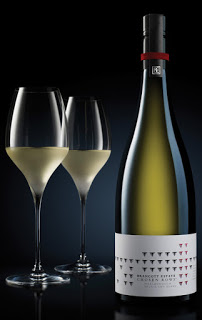
What better day then, in context, to talk about the freshly launched new Brancott ‘Chosen Rows’ Sauvignon Blanc? A ‘limited edition release Sauvignon Blanc handcrafted from exceptional grapes selected from chosen rows on Brancott Vineyard’ (according to the press release).
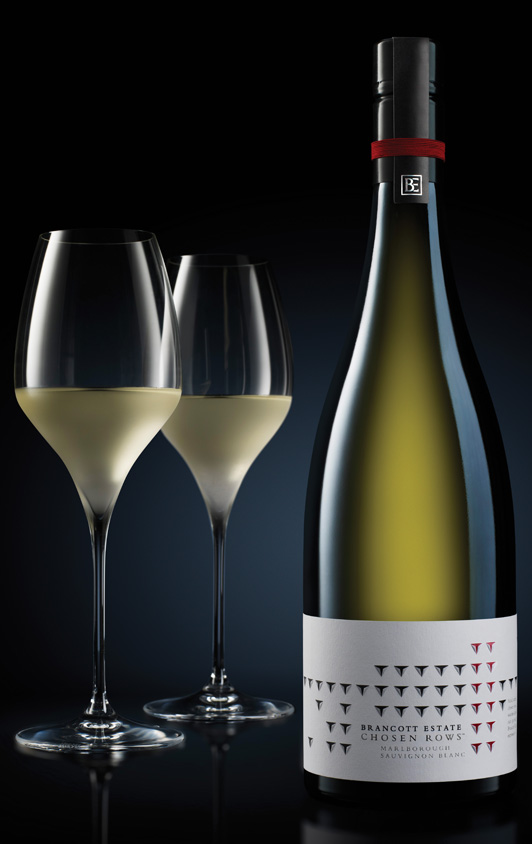 More importantly, this is a wine that has been deliberately pitched as an ‘icon’, with the intentions clearly aimed at making this the best (and most expensive) Marlborough Sauvignon Blanc on the market. A wine described as the ‘ultimate expression of Marlborough’s signature varietal’ according to Brancott Estate Chief Winemaker Patrick Materman.
Personally, having seen a few icon wines in my time (and endured through the odd awkward icon launch), I am typically cynical about such a release, particularly when the pricing seemed to be more of a statement than a reflection of costs (that $70 price-tag is more than $20 above its peers after all), and the packaging and message seemingly finessed by brand managers first, winemakers second.
Yet I think that there is more to this story than just a ‘statement wine’.
In fact, as Patrick explains, this is a ‘winemaker created wine’, with the Icon project dating back to 2008 (and indeed tracing back to Patrick himself).
‘I’ve always been challenged why we haven’t reached aspirational pricing with Marlborough Sauvignon Blanc’ he explains. ‘How do we apply our research to creating an umbrella wine?’
The research he’s talking about kicked off with the 2009 vintage, with the project dedicated to examining ‘Every aspect of how we had grown and made Sauvignon Blanc in the past’
Some 14 vineyard blocks were used in those initial trials, with the blocks deliberately crop thinned right back to one bunch per shoot. Dennis Dubourdieu, Professor of Oenology at the University of Bordeaux and something of a Sauvignon Blanc expert, was also employed at this time as a consultant, spending time in the vineyard and with the winemaking team discussing philosophies.
At harvest these parcels were hand picked and kept separate in the winery, with some 40 different parcels the net result. Those 2009 vintage trial wines were never commercially released, although library samples were bottled for comparisons (the rest making its way into other Brancott labels such as the ‘B’ Sauvignon Blanc).
After a closer look at the different samples it was agreed that the parcels from the original Brancott vineyard (where you’ll find some of the oldest Sauvignon Blanc vines in Marlborough) were considered the most appropriate, and, finally, in 2010 the decision was made to focus purely on Brancott fruit.
Concurrently, the Brancott team were also working with some Kiwi research labs on another part of the project, focusing particularly on some of the elements involved with Sauvignon Blanc ageability. As a part of this process they specifically looked at thiols, an organosulfur compound that Patrick describes as a ‘main driver of Marlborough Sauvignon Blanc.’
It is these thiols that generally contribute to the distinctive, ‘cat pee on a gooseberry bush’ characters that we see so much in Marlborough Sauvgnon Blanc a character that, for many local makers, is actively avoided (on that topic, that avoidance is why many serious Marlborough Sauvignon makers are moving their top Sauvignon plantings out of the heavier, fertile alluvial soils near the Blenheim airport as these richer soils are believed to aid thiol creation).
What the Brancott winemakers – and consultant scientists – eventually derived from this research was a better understanding of the process of monitoring and measuring thiols, looking at both how thiols are created and how they age. They then isolated certain compounds that are more stable, and thus more beneficial for Sauvignon Blanc wines intended for ageing.
After more trials (the fiddling has continued with subsequent vintages), the 2010 vintage wine was finally decided to be the first commercial release, with the formula consisting of grapes picked from a few ‘chosen rows’ of low yielding vines on the Brancott vineyard. These grapes were then whole bunch pressed and fermented both naturally (60%) and with a cultured yeast, the wine than spending 9 months on lees (for the 2010 wine. 2011 and 2012 is closer to 12 months) largely in large oak cuves.
The resultant wine, as Patrick explains, was crafted ‘with real palate weight richness in mind’ unashamedly ‘involving some winemaking artefact’ but with freshness too. Some 3,500 numbered bottles of this 2010 release have been made, the style ‘an ageworthy wine with great palate weight and texture, that retains its signature Marlborough fruit expression – its sense of place’ (that’s from the press release).
I tasted the 2010 Chosen Rows Sauvignon Blanc with Patrick and a few other scribes recently, the wine placed in a lineup of contemporaries drawn from all over the world, as well as in a mini vertical.
What struck me most about this Sauv was that, contrary to intentions, it really didn’t get any more interesting with bottle age. Unlike, say, the more worked Dog Point (for example), which really needs more time for that winemaking to integrate (I like to drink the Section 94 at about 4 years of age), I thought that the natural Sauvignon purity was lost the older the Chosen Rows samples got. Personally, I’d release it earlier and really make an impact, particularly as that 2012 is a stunner…
Regardless, there is no questioning that this Chosen Rows is a clever wine. There is a lot of cleverness about it really, from the bespoke packaging to the great acid structure of the wine itself. Each vintage is a step up in quality too, signalling well for the future. It’s already a very good wine and a few more releases should see the quality really quick into proper ‘icon’ territory (the 2012 is there already).
My quibble is that this is no better wine than similar established ‘icons’ from the likes of Dog Point, Seresin and Cloudy Bay et al. and yet the price is almost 50% higher. Looking at them side by side and those extra dollars are a little hard to quantify.
The wines
(All were tasted non-blind and reasonably quickly. Notes as written on the day. Extra bits in Italics).
Vina Morande Sauvignon Edicion Limitada 10 (Casablanca, Chile) $25
Sourced from El Ensueño, Lo Ovalle sector, in Casablanca. Clay sand soils with low fertility and it has a cold, coastal climate. Clones 1 and 5 from Davis, California, are used. Hand picked. Low-temperature maceration is made to extract maximum aromas and then pressing takes place. Later the juice is decanted and fermented in 2,000-litre wooden vats. The wine is kept on its vats for 6 months prior to bottling. 12.7% alc. pH:3.36.
TA 5.30g/l.
RS 4.5g/l.
Lemon and nettle. Bottle age fattening this up. A little too much slightly sour, sweaty thiol characters, even if the fullness and intensity are very high. Some nice lime juice to finish too. A fraction weedy to really love but good. 17.5/20 91/100
Cape Point Vineyards Reserve Sauvignon Blanc 2010 (South Africa) $35
A little Semillon in the blend. A blend of wild and natural ferments. Barrel fermented in 10% new French oak.
14 months on gross lees with frequent lees stirring. 13.8% alc. RS 2.5g/L. pH 3.14. TA 7.3g/L.
Volatile, gluey, and slightly odd, the acidity raw and clumsy, if certainly carrying lots of power. A pup and maybe might recover with bottle age. But an odd, questionable bottle here ( I’ve had much better previous vintages of this). 15.5/20 85/100
Dog Point Section 94 Sauvignon Blanc 2010 (Marlborough, NZ) $42
(Not dissimilar to this note really)
Distinctive white pepper nose. Sharply defined. White pepper and grapefruit nose. Almost Gruner like. Palate has beautiful flow, some sour grapefruit acidity and spectacular length. A little oak tannins to finish but can’t detract from lemon and creamy edges. Contained and fierce acidity but quite brilliant too. 18.5/20 94/100
Cloudy Bay Te Koko Sauvignon Blanc 2010 (Marlborough, NZ) $45
Machine picked. Immediately pressed and settled for 2-3 days. Wild ferment in barrel (just 8% new) with full malo. 14 months in barrel. 14% alc. pH 3.36. TA 6.7g/L. RS 3.9g/L
More passionfruit here. Passionfruit marshmallow. Looks very open, very creamy and nutty. Lots of oak artefact and wild ferment lees wildness. Generous and much flavour. But the play-doh oak and lees is almost oppressive in its hugeness. Less oaky than in previous years too. Still a very good Sauv. 17.7/20 92/100+
Brancott Chosen Rows Sauvignon Blanc 2010 (Marlborough, NZ) $70
More recognisably Marlborough Sauv here. There is nettles aplenty. Very tight and retains a little primary fruit. Super clean. Backward in context. Lees rather than barrel character. Super acidic and quite backward. Lean and clean. Has lovely purity. I’d like a fraction more wildness perhaps but clean and fresh as. A little too lean? 18/20 93/100
Henri Bourgeois Cuvée D’Antan 2010 (Sancerre, France $70)
What a lovely, essence of Sauv style this is. Varietal passionfruit. Really gentle and effortless palate. Lovely open and clear varietal nose. Purity of Sauvignon Blanc to finish. Pure, gentle clear and bright. The essence of open, intense, pure Sancerre. I’d drink this in a heartbeat. 18.5/20 94/100
Alphonse Mellot Generation XIX 2010 (Sancerre, France $70)
Flat, Oxidised and rather toasty. Looks broad and underwhelmed. Flat bottle? 14/20 79/100
Chosen Rows mini-vertical
Brancott Chosen Rows Sauvignon Blanc 2009 (Marlborough, NZ)
An unreleased wine from the Brancott vineyard. Bottled just 12 cases.
Again recognisable as Marlborough Sauv with its hint of gooseberry. Has an extra flesh and ripeness to it. Fullness. Passionfruit juiciness. Gentle and ripe and slightly sour. A little mono- dimensional. Pleasant but not profound. Tinny finish. 17
Brancott Chosen Rows Sauvignon Blanc 2010 (Marlborough, NZ)
Rather more lees action on the nose. Looks a much more worked, less standard wine. Less thiols too. I just wish the palate wasn’t so linear and contained, the herbs to finish and freshness is excellent though. 18/20 93/100
Brancott Terroir Series Fume 2011 (Marlborough, NZ)
Fermented in puncheons. Was Previously Chosen Rows level fruit quality (but not sourced from the Brancott vineyard).
Interestingly you don’t see the oak on the nose as much as expected. Oak all over the palate Does on though which is creamy and cut with oak tannins. The more I look at this the more I think there is too much oak for the delicate fruit. Almost there. Lots of acidity and drive. 17/20 90/100
Brancott Chosen Rows Sauvignon Blanc 2012 Barrel sample (Marlborough, NZ)
This spent a full 12 months on lees, although this is still a pre bottling sample.
Super fresh and passionfruity, though not thiol ugliness.. Nettle and juicy but shows of structural depth. The sweetness of lees here is a lovely counterpart to the full throttle lemony acidity. Full of life but with power too. Primary. Release it now! Delicious Sauvignon Blanc. 18.5/20 94/100

Leave a Reply