
372 days. Just over a year. That’s how long this Yalumba The Tri-Centenary Grenache 2022 sat on its ‘skins’ (which means it stayed as a combination of grape juice and skins/seeds, rather than just juice), which is a shitload for any wine. Even for natty skinsy things, or tannin-focussed Cabernet/Nebbiolo/etc usually spend 30-90 days on skins. Yangarra’s Ovitelli Grenache is six months on skins. But a year? Wild.
Such a move represents just how seriously Kevin Glastonbury and the Yalumba team take Grenache. After years of experimentation (just a few vintages ago, this wine spent half that time on skins), they’ve realised that the structure and flavour profile that comes with extended skin contact deliver some magic to Barossa Grenache.
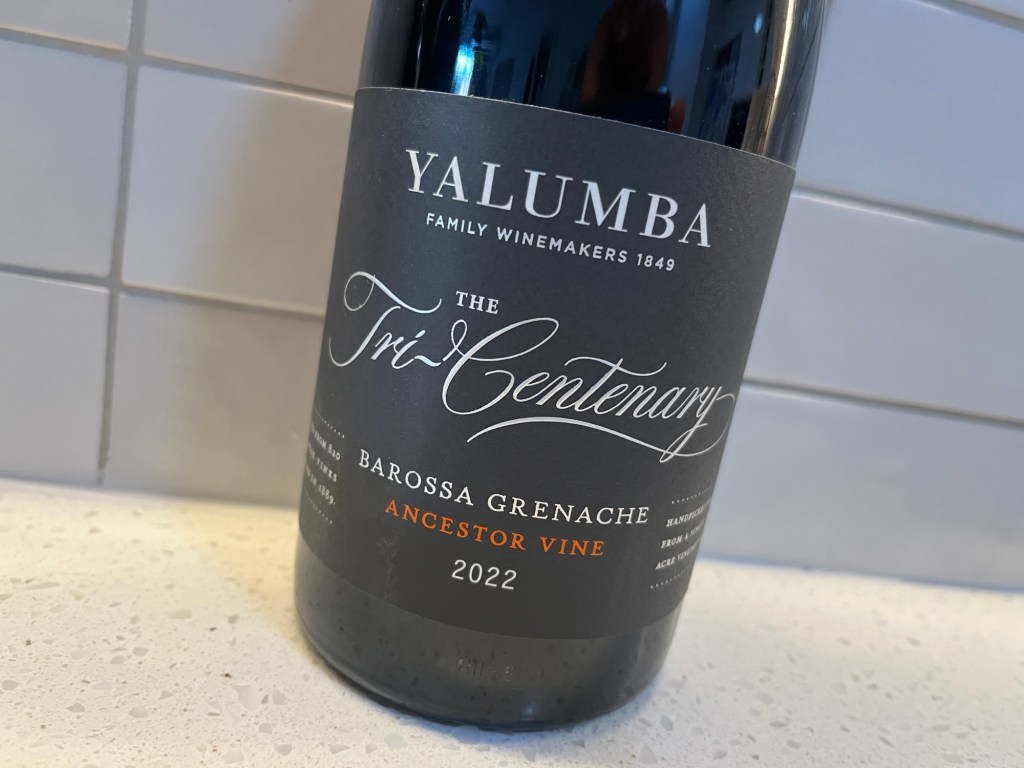
The other element here is the vines – this red comes off a 1.12ha block planted in 1889 (Tri-Centenary is a nod to vines that have lived through three centuries), and you can’t deny that the old babies add more x-factor again.
Still, this is going to be a divisive wine. It tastes of warm raspberries, shit loads of spiced cherry wildness and an array of chewy, bitter, moody, biting stewed and fresh fruit. Only medium-bodied, this isn’t light, it’s not easy drinking, and it’s def not fruity. I asked myself more than once whether it was too hard and bitter. But damn, this is a wild ride of complexity, with a challenging profile of multi-layered flavours and next-level structure that I admire at every turn.
Best drinking: I actually think this could be best drunk earlier, just in case the tannins take over. 18.7/20, 95/100. 14%, $80. Would I buy it? I’d go a bottle for intrigue alone.
P.S. Have you subscribed to the latest emails yet?
Choose from instant, daily or weekly updates. It's not an everyday thing, but a free way to get updates fast and no spam (ever).
Help keep this site paywall free – donate here





3 Comments
Interesting – I haven’t bought any for a couple of years, will have to try it.
That amount of extended skin contact must create a few microbiological control issues.
Not necessarily. You just put in a sealed tank or vat and then make sure you keep the cap wet. VA is the bigger issue for extended skin contact and CO2 is useful. This AWRI note spells it out: https://www.awri.com.au/industry_support/winemaking_resources/winemaking-practices/winemaking-treatment-extended-post-fermentation-maceration/
I guess that’s right as long as the cap stays wet the chances of undesirable bacteria/yeasts getting is low.
I’ve seen cases where anaerobic bacteria find their way in and spoil everything, especially over such an extended period. Sealed tanks weren’t as common as they are now.