Spain = good value Tempranillo.
Just as Australia gets typecast as the land of Shiraz and big reds, Spain suffers the same fate, often consigned as the country of budget Tempranillo/Garnacha and cheap bottle-fermented sparkling (Cava).
Admittedly, I did taste a shedload lot of affordable Tempranillo in Spain for Barcelona Wine Week (BWW) last week. But there was also an ocean of greatness that felt a long way from cheap and cheerful Temp, spanning everything from superb Canary Islands orange wines to a profound Spanish vin cotto from the outskirts of Barcelona.
Spain is great.
Of course, I barely scratched the surface of what was on offer at BWW, with two halls and 1300 producers making what is Spain’s largest wine fair a challenge to do any justice (even if this fair is much smaller than Vinitaly or Wine Paris). I could have spent a week just tasting Cava and Tempranillo while barely scratching the surface.

But, I gave it a red hot go, and today I’m pulling out a few Spanish wines that tickled my fancy last week. These are more vibes than detailed tasting notes, and I present this collection with a little apology – lots of these wines are barely found outside Spain, let alone here in Australia. If you need an excuse for a Madrid/Barcelona/Seville etc detour next Euro holiday, then these wines are it.
There will be a part two and three covering a very interesting continuation of this Spanish adventure in Castilla y León.

There’s nothing unfamiliar about Clos Mogador (and gleefully available here in Oz). Sublime Priorat wines from one of the region’s modern pioneers. Some of the recent vintages of this blend of Garnacha Carinyena (aka Carignan), Syrah, and Cabernet have looked heavy and warm, with the blackness of wines like the 2021 threatening to make the wines OTT undrinkable. But these 2023 releases looked sublime – the wall of darkness less formidable, and the tannic depth and inky layers compelling. They’re shit-hot wines. The lineup of Clos Martinet wines alongside was just as interesting, too, as a Montsant reminder. Interestingly, I tried the full lineup of Terroir al Limit wines straight after, which is like comparing apples and pears (less out and out power, less oak, more Pinot-esque perfume), and I much preferred the Mogador magic.

From one Clos to another, and one very rare Clos Figueres Cabernet Sauvignon. Owner Christopher Cannan was on the stand, pouring this extremely rare beauty. As he explained, in 2023, they liked the Cabernet Sauvignon so much that a single barrel was bottled as a single-varietal wine. It’s a wow wine too, with a chocolatey roundness and tannic powdery chunkiness that is closer to a Spanish Sassicaia. Maybe a little oak-forward, but also lavish because of it. I have no clue about prices, availability or anything, but hey, if the expanse of Super Tuscans and/or Priorat is your bag, this is something speccy.

Speaking of sublime, this Garnacha comes from a supergroup of vignerons, including René and Isabelle Barbier (Clos Mogador), Fernando and Marta Zamora (winemakers and teachers at the University of Tarragona), plus Charlotte and Christopher Cannan. This El Espectacle de Montsant 2022 comes from a 100-year-old plot of vines in Montsant that is apparently precipitously steep, with the site delivering a rather beautiful red. There’s the withering red fruit of old-vine Garnacha, along with dried herbs and a sense of almost floral delicacy. If anything, it got lost in what was a lineup of oversixed Priorat, but I’d love a long look at a wine that felt like the essence of Garnacha.

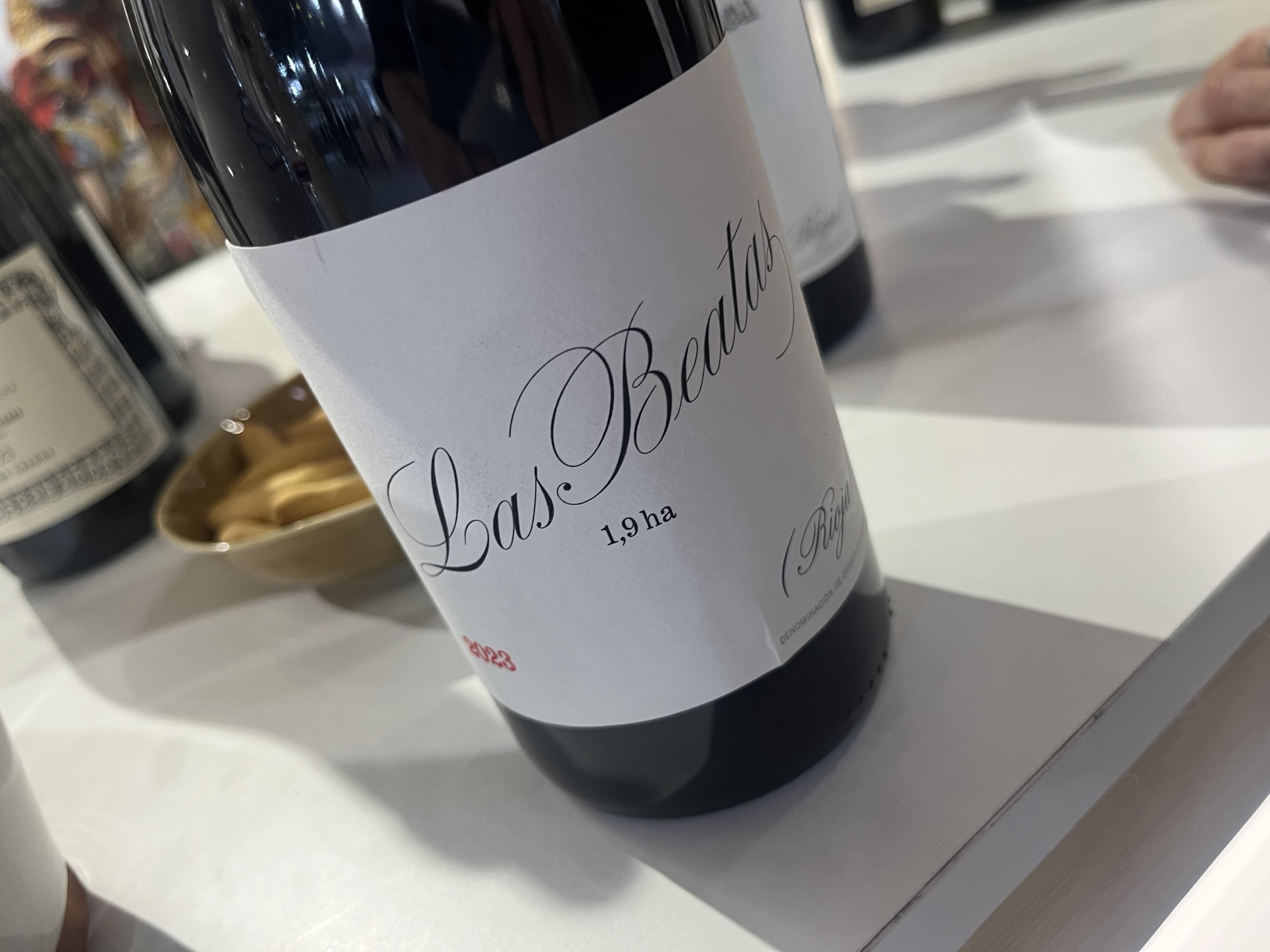
While we’re swimming in the very deep end of Spanish wine, I need to mention what was easily the best Rioja I had all week. From a meagre 1.9ha plot, this sublime Telmo Rodriguez Las Beatas 2023 had x-factor. There’s this black fruit and black olive cascading black fruit complexity which felt more like a top Hermitage (or one of the grand Standish or Sami-Odi Shiraz to bring it local) yet very much cast in Tempranillo land. So much about Rioja is defined by oak, but this is a wine of terroir. Believe the hype (though don’t look at the prices).

I ran out of time to really explore the Telmo Rodriguez lineup (a massive miss), but this caught my eye on the way out. It’s a Mencía-dominant field blend from a replanted vineyard in Valdeorras (one of the most important Mencía-producing regions in Spain). What I like here about this Telmo Rodriguez Falcoeira A Capilla’ 2023 is the definition – it’s a wine of bright, herbal, yet still ripe red fruit, with the fragrance and Cherry Ripe beauty driving the palate. There’s just a little of the bitter Mencía tannin astringency, though not enough to derail what is a lovely wine.

Speaking of Mencía, I spent a chunk of time on the Ribeira Sacra D.O stand working through a whole lineup of wines looking for standouts. For all the hype, this remains such a mercurial grape, with this ability to look like an ethereal, herbal, finely tannic light red in the best wines, while the challenge with unripe tannins and the sometimes intrusive leaf litter meaty mulchiness derails plenty of other wines. Out of probably 25 wines, I thought this Don Bernardino La Capona 2020 was the hero. Tempered by two years in oak there was an extra layer of mid palate flesh as a counterpoint to the white pepper and cherry fruit, with tannins that felt polished. There were no prices on the selected range of wines in this lineup (which I love. Take prices away and the real cream rises), and somehow I’d gravitated towards one of the most expensive Mencía in the whole shebang. It’s worth it, though.

Likewise, the producers from Rías Baixas had also coupled together a large lineup of Albariño on easy pour (again with no prices), which served up a wonderful leveller of wines from simple unoaked fresh things to the sometimes cheesy barrel-fermented styles (most of which I don’t love – this grape doesn’t need oak). I loved this Terras do Sur Albariño 2024, which balanced the saline fineness with a little leesy filigreed texture. There’s a real handmade feel here, and that crystalline vitality wouldn’t be out of place in Chablis rather than Galicia. Again, I don’t think this is a cheap wine, but a highlight.

Shifting further north, and onto a Spanish surprise. I wandered into the Txakolina area looking to get a look at some smaller Txakoli producers and found something different. For anyone unfamiliar, Txakoli is the ultra crisp white typically made from Hondarrabi Zuria grape and served from a height into your wine glass in a San Sebastian bar. High acid, crunchy, often bottled with a little CO2, it’s a distinct Basque country white wine that you see nowhere else. But it was this Hiruzta Parcela 1.7 2023 that took my fancy – it’s made from Hondarrabi Beltza, which is the red grape allowed in the Getariako Txakolina area. Interestingly, it shares a DNA link with Cabernet Franc, and instantly I felt like we’d taken a detour over the Pyrenees into the Loire (but with even more spice). The Hiruzta vineyard sits on the Spain/France border on the Jaizkibel mountain, and you get the combo of altitude and the typically chilly clime of the Basque Atlantic-facing coast. There’s enough red fruit here to make it a delicious drink too.

On the eccentric track, enter this fascinating red from the Canary Islands. This Llanovid Mission’s Grapes Listán Prieto comes from the largest producer on La Palma (the NW island of the chain), using an old clone of the Listán Prieto grape (which has become a phenomenon in South America, where it is known as Uva Pais or Criolla). This example comes from ancient vines at over 1500m up the side of the La Palma volcano (which devastatingly erupted in 2021). You wouldn’t have picked this as coming from the warmth of the Canary Islands either – it’s crunchy, and finessed, sitting halfway between something like Gamay or Garnacha and yet with tannins that feel rustic. There’s quite a bit of light and shade here – something very interesting (the only thing I didn’t catch was the vintage, 2023 perhaps), and I couldn’t help but compare this with that other great volcanic wine style, Etna Nerello Mascalese, if a little darker rather than red fruit. Fascinating.

Easily the most impressive island wines I tried all week was this lineup of superb Oliver Moragues Mallorca releases. This estate has been in the same family’s hands since 1511 (!?), and the focus is firmly on traditional island grapes, including Giró Rós, Prensal blanc, Gorgollassa, Callet and Manto Negro – none of which I have much experience with, which is even more fun. Biodynamic farming, wild yeasts, minimal additions, and everything sitting below 13% alcohol (yet hardly unripe) made for what was a rather next-level lineup that I absolutely loved. The Prensal Blanc was like a lemony, honey-tipped, Fiano-esque take of light florals and sunshine, yet with a Vermentino-like tang. The Gorgolassa had an almost Piedmont-esque tannic finesse, with a bit of a Freisa or light touch Nebbiolo vibe and just a little hybrid-like wildness. Fantastic! On a quality level, this felt like another tier – if this were in Piedmont, they would be €50 wines. Worth a trip to Mallorca just to visit.

Next comes a red with an Australian connection. I saw Dr Dylan Griggs (of Vinya Vella fame) shout out on Insta to anyone visiting BWW to swing past the Espelt stand to experience some fantastic old-vine reds and meet the warm Anna Espelt. I wasn’t disappointed. This Espelt Coma Bruna Très Old Vinyes 2019 comes off a plot of 100-year-old Carignan vines planted in the upper regions of the Empordà region, which sits on the coast between Barcelona and Girona at Spain’s NE corner. There’s a careful mix of withering, dry grown blackness here, a little smoke and prune, but without feeling dessicated (or as overwhelming as some of the Priorat wines above). A black-fruited wine, and concentration for days. Spain lobs up so many of these sublime old vine Garnacha and Carignan wines, and they’re such pleasurable drinks – with a clear link in style and flavour to some of the Grenache and Mataro wines that Australia is blessed with.

Circling back further south, and one of my lo-fi discoveries of BWW, Can Morral del Molí. This stand was in Hall F – aka land of the cool shit. F cut different to the rest of the halls, where producers typically have either a stand with a seat and a fridge, or if you’re at a big stand like Torres, something like a virtual cellar door cum board room. Instead, at F, it’s just small, usually an artisan producer with a wooden table and a little flag. F was full of somms wandering through tables of natural wines, oddities, gypsy winemakers and a smorgasbord of other stuff (RTDs, wine drinks, cool spirits, etc.). I ran out of time to give F a proper look over, and that’s to my detriment. Anyway, Can Morral del Molí! Technically, we’re in Penedès here, but it’s basically the Barcelona outskirts, with a multi-generation estate with a modern leaning. Orange wine, natty reds and the like is the vibe, but also quite impressive organic Cava. I quite enjoyed the orange rind joy of the Vinya del Xesc 2023, an amphora-raised skin-contact Macabeu as well.

The twist of the Can Morral del Molí lineup was this trio of legacy sweet wines (with a long history in the region). The hero is the Rars Bullit – a Macabeu made in a vin cotto style, i.e., where the must is boiled (bullit is Spanish for ‘boil,’ I think) to super-concentrate the wine. It’s a wonderfully luscious thing too, with layers of honey, barley sugar and toffee that’s a full mouthful of generosity in a way that feels halfway between a Vin Santo and a young Muscat. Loved it.

While we’re on the sweet wines, I had a very brief taste of these two luscious old Pedro Ximenez sherries from Bodegas Serdio, and they didn’t disappoint. The 40-year-old release on the right has all the feels of the special release beyond-Rare Rutherglen Muscat, but with more PX blackness (and a little less rancio x-factor). These are wines you only need a few drops because they’re so concentrated. I’d hate to see the price of the 40yo in particular – it’s the sort of thing that would get high points in a heartbeat.

From one classic wine to another, enter the latest La Rioja Alta Gran Reserva 904 2016. It feels all shades of wrong to be tasting this Riojan icon at ten – anything less than fifteen to twenty years feels like cradle-snatching. I see the oak as a main character on this wine, a wave of choc-vanilla smoothness that washes over everything. It’s super classy, but the best years are a long way off. A stiff white collar of a wine.

From old-school cool to blue chip, this lineup of new Roda releases was nothing if not seamless. They’re polished, lavish wines that share more with the La Rioja Alta smooth lines than the time-honoured Tondonia. The step up to Corimbo is a big one in this lineup, as suddenly you’re trading in some charisma to what is otherwise a sometimes too spotless modern Rioja lineup. These are sleek wines – a perfectly tailored suit in Tempranillo form.

Intriguingly, Roda has just launched a new rosé and hot dog is it serious. Barrel fermented (come on, we’re in Rioja), it’s what the Spanish would call a ‘gastronomic’ rosé with savouriness and rather a lot of flavour. A red wine drinkers rosé and definitely has a place.

For a fascinating final counterpoint, one of the only wines I actually drank all week was this R. Lopez de Heredia Viña Tondonia Reserva 2013 (at the iconic Cal Pep). I enjoy the relaxed and timeless Tondonia style so much, with this a genuinely refreshing Rioja (the 13% alcohol helping no end). Compared to so much of the Riojan norm, the old oak and moderation cast this as a wine that feels older, more secondary and truffle-soaked, while packing an effortless ageability that is hard to resist. A great drink, although I can also see how not everyone is going to like this Rioja mode.
(I travelled to Spain courtesy of ICEX, the Spanish Institute for Foreign Trade).
Help keep this site paywall free – donate here

2 Comments
Nice to finish with Tondonia, such a classic. Spain is an incredibly exciting wine place these days. The newish Vino de Pasto trend in the old El Marco de Jerez is well worth a detour. And then there’s the food…
Great post. Looks like a hectic but good time?
These trips are always frenetic. You basicallly rush from tasting to tasting to to tasting to dinner to bed. Stir in a healthy dose of jet lag and jeebus it’s a mess. Highly entertaining though.