
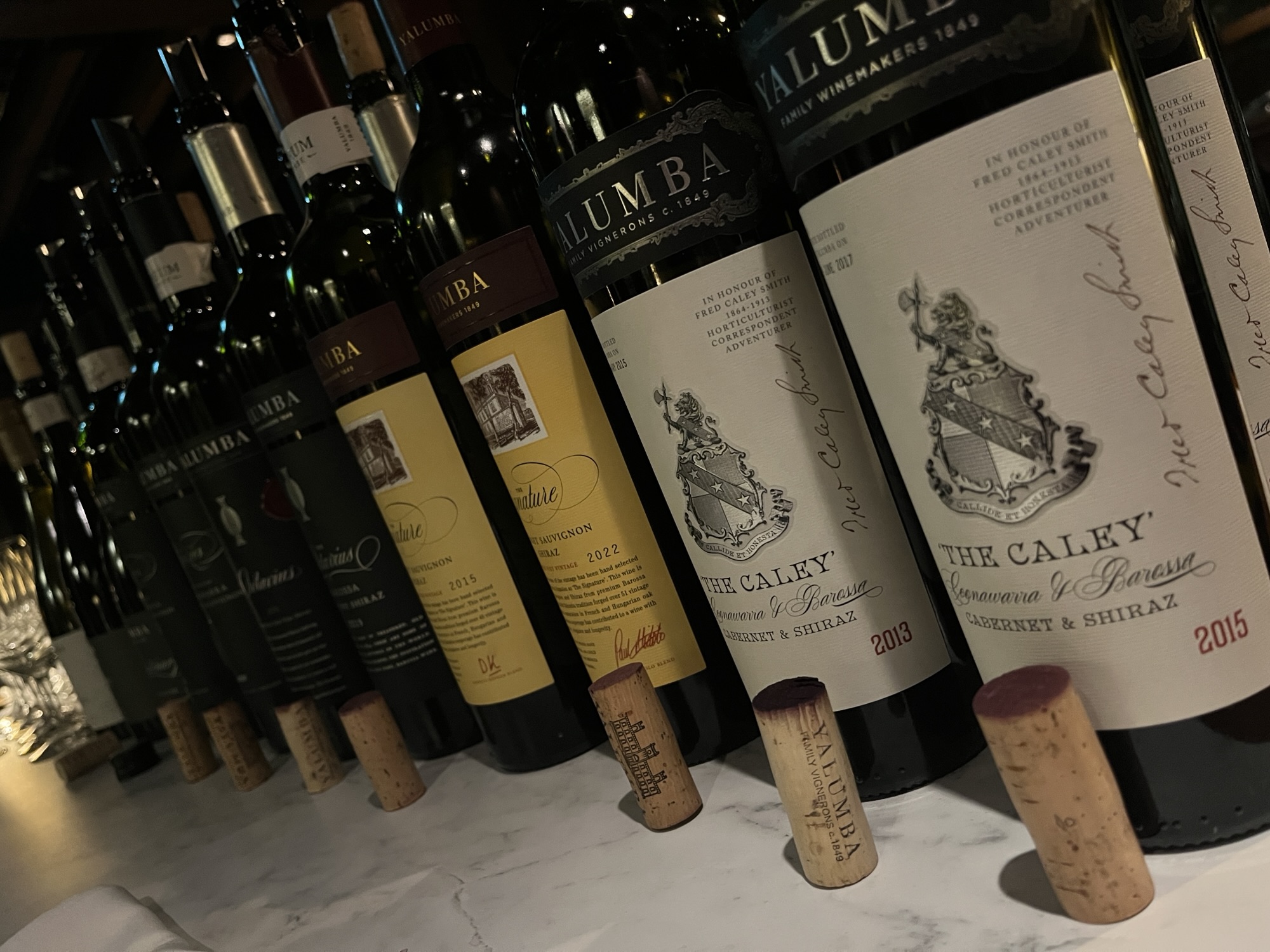
Jessica Hill Smith, the sixth-generation descendant of Yalumba founder Samuel Smith, has a wish.
She wants visitors to one day be able to purchase birth year wines from Yalumba, which is a grand ambition. Somewhat impractical, however, because as Louisa Rose pointed out at a Sydney tasting recently, it would require building a whole new shed to store reserve wines.
So, for the moment, team Yalumba are lowering the eyes (a little). The focus for the moment is to keep back a portion of each vintage (circa 10%) of the top-tier Yalumba wines and release them at ten years of age, and then eventually at twenty.
I also admire this plan, especially when the aged wines are so bloody good.
Actually, the only stumbling block that I can see is tree bark. Yalumba have only recently shifted wines like Signature from cork to screwcap seals, which means there remain plenty of bottles in the Yalumba cellars at the mercy of the cork gods. And to prove a point, in this tasting, there was a flat-looking, cork-closed 2015 Signature (swiftly followed by a much more alive second bottle), to remind us of the fallibility of the slice of Quercus stuffed into the top of so many treasured old Yalumba releases.
Anyway, enough closure politics, let’s talk wines. There remains an unquestionable old-school South Australian charm about the top-end Yalumba premium releases (we’re mainly focusing on reds here) that feels timeless. Calling them old school even does a disservice to the constant evolution happening in the Yalumba machine, from the vine nurseries to the yeast work. From the outside, you see 175 years of history, lots of Barossa Cabernet/Shiraz and big wines. But on the inside, the restless quest for refinement is just simmering below the surface.
Want an example? Check out the winemaking journey that the Tri-Centenary Grenache has lived over the past 15 years, going from a wine matured in small barrels and treated half like Shiraz, to what is now a wine that spends a whole year on skins in tank like a Sicilian natural wine.
I’ve always been fascinated that Yalumba has its own cooperage too, which Robert Hill Smith calls an ‘accountant free zone’ given that it’s so much more expensive to bring that winemaking operation in-house. The oak integration in Yalumba wines is typically superior, which is another element of the Yalumba recipe that deserves admiration.
Meanwhile, I need to shout loudly about the quality of the Yalumba The Caley Museum Release Cabernet Shiraz 2013. Four years ago, I thought it a lesser light in a lineup of megastars, but on the evidence of this bottle, I’d revise that and elevate it to ‘Andrew undercooked the greatness’ status. The thought that rolled through my head as I tasted this in a dark room last week was about some of the interesting Penfolds Special Bin vibes it evoked. Obviously, Caley is Yalumba, and thus a different winemaking style, but the life and mouthfilling flavour that this 13-year-old red packs in is remarkable. It’s a quintessentially South Australian Cabernet and Shiraz flavour profile, of course, with the hook simply about the cascading, enveloping layers of flavour that also mark the Penfolds Special Bin wines as timeless icons.
In other words, the Caley is a truly great Australian red wine (and cheap compared to Grange/the latest overhyped Penfolds release has dropped this month).
Ok, enough hype, let’s dive in to a look at the latest smorgasboard of Yalumba ‘Rare and Fine’ releases.
As I mentioned, this was led by the ever-knowledgeable Louisa Rose, and I’ve included some of her comments for colour.
Another big note here, team – this content is for subscribers only.
It’s absolutely free to subscribe, and zero spam. You’ll simply get emails when new posts are made.
So why am I doing this? As I mentioned here, I’m trying to fortify my reviews from the daily AI copyright scam onslaught, and this is one of the tools in the publisher’s arsenal.

Subscribe to keep reading
This is not a paywall. Subscribe for free and you get email updates and I keep AI out.

2 responses to “Old Caley, new Signature and all the Yalumba hits from the 2025 Rare & Fine release”