

In Australia, we have such a polarised Champagne market. Grower Champagne gets plenty of (fine wine) attention, but with small volumes and high prices. ‘Big house’ (ie famous brand) Champagne gets even more attention, albeit with lower prices and lots of volume.
But in between, there’s a vast Champagne middle that doesn’t get the Australian attention it deserves, and Veuve Fourny is a prime example of the treasures that lie beneath.
I’ve written before about Fourny, after falling for the ultra well-priced Blanc de Blancs and Cuvée R back in 2019. So last month, on a cold, crisp Champagne morning, I found myself in the town of Vertus in the southern Côte des Blancs to meet the ever-affable Charles Fourny and taste some Veuve Fourny fizz…
Here, with the Vertus Premier Cru a continuous sea of Chardonnay just over the fence (you can see it as the vineyards spreading away in the background of the pic below), and one of the seven remaining clos in Champagne (the 0.29ha Clos Faubourg Notre-Dame) surrounding the original ‘house’, it felt like visiting something real.
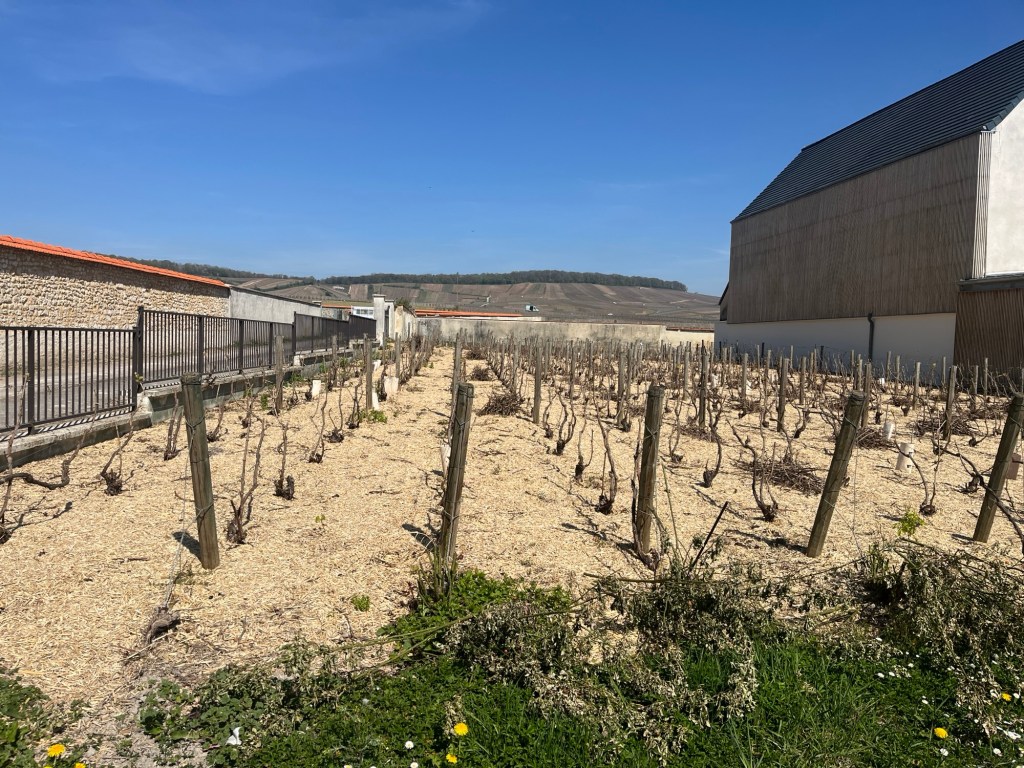
More than symbolism, Veuve Fourny owns nine hectares of vineyards around Vertus that make up over 60% of production. Charles (and his brother Emmanuel) have also embraced regenerative viticulture throughout the vineyards, with a regime that is effectively organic, although he is honest enough to admit that they still use the occasional non-organic spray when necessary.
That honesty is why I really like this house. Against a backdrop of Champagne’s eye-watering price rises, these Veuve Fourny wines are modestly priced and absurdly good. Even the base wines were drinkable – I wandered around the winery with Charles and tasted 2024 base wines (mainly Vertus Chardonnay) out of tank and barrel, and they were rather drinkable, right out of the vat. Even here in Australia, base wines can taste like acid water, so that was an instant mark of quality.
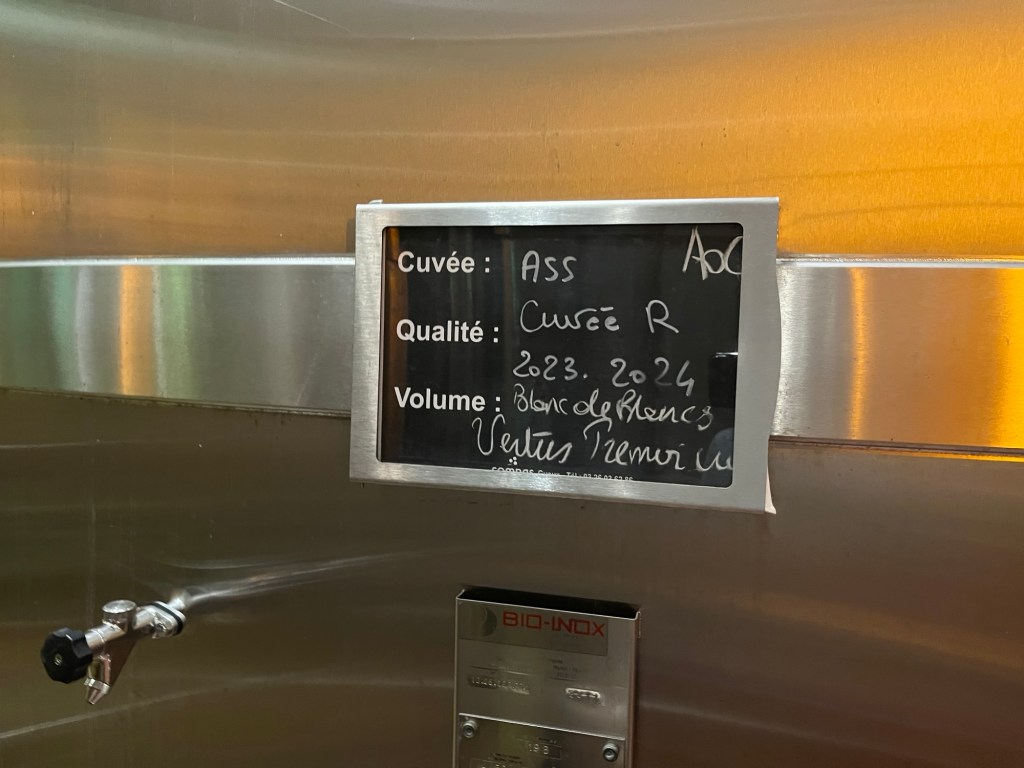
There’s more to the story there. Charles opened the valves on two similar tanks of 2024 wines for me to taste as an exercise. One was free run juice destined for a future Veuve Fourny cuvée, the other, some ‘tailles’ (ie pressings) destined to be sold off to what Charles cheekily referred to as ‘traditional Champagne producers’.
And there it was. All the delicacy, all the effortless power and eye-catching purity in sample a) vs what was a fresh but phenolic expression of what most other Champagne tastes like in sample b).

Of course, free-run juice is just part of the recipe here. Dosage is typically extra brut (g6/L or less) across the whole range and using grape juice rather than sugar. There’s also a ‘perpetual reserve’ (which you need to say as ‘reserve perpetual’ with a French accent to do it justice), which is a multi-vintage solera system that includes over a decades worth of vintage wines. That system is complemented by a more classic reserve wine program (using juice kept in small oak) serving to bump up complexity across the range.

Oak is used for maturation extensively here, largely on the premium cuvées (with tank maturation preferred for the Vertus Extra Brut). Charles increasingly uses large foudre for the first stage of maturation, and is gradually buying more big wood replacements (like the one below). The family has just bought the adjoining property, which will allow for the expansion of storage for tanks, barrels, and finished wines.

From winery to vineyard, and interestingly, Charles believes that the best plots on the Vertus premier cru vineyards are not mid-slope, like Burgundy, and instead lie on the gentle, flattish ridges with the deepest chalk. The hills, apparently, give too much flavour volume, which is great for Pinot Noir but less ideal for refined Chardonnay.
Such vineyard commentary doesn’t mean much, but it was important to stand there, peer at the slopes, and then taste a proper vineyard expression in the glass. It’s especially significant for Champagne, where fruit and wine production is disconnected, with monoculture vineyards dominating the hillsides while wineries are often innocuous buildings in the townships.
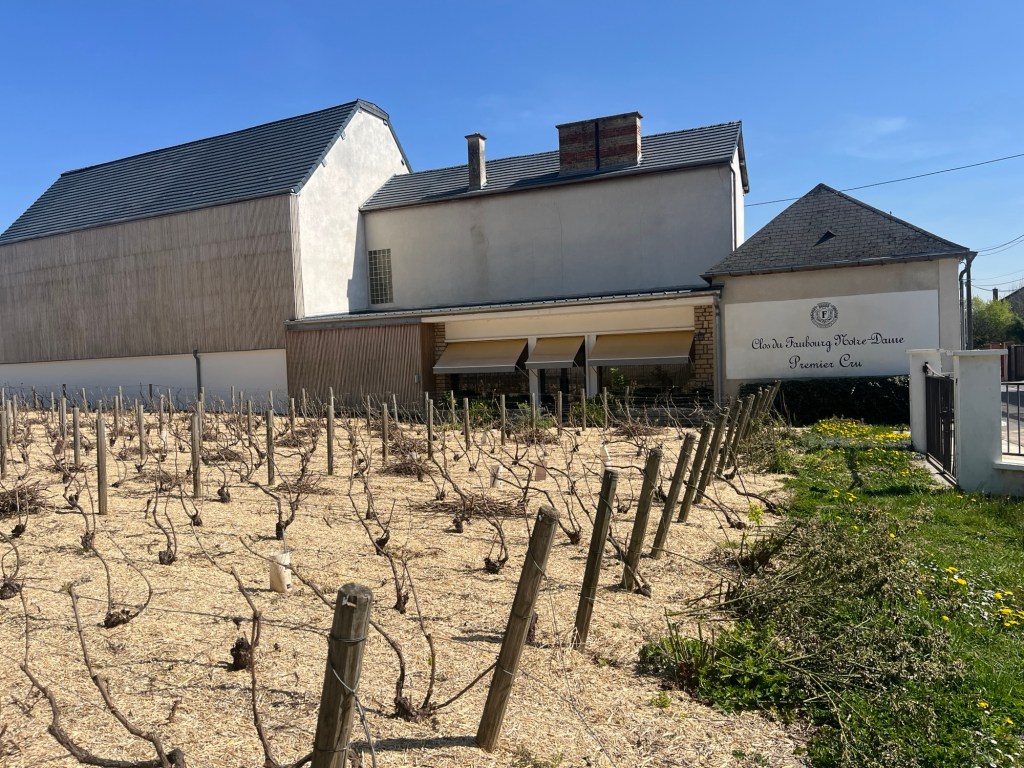
It’s a tangent, but Champagne is weird like that. It’s also depressing driving around the region and noticing how scorched-earth, glyphosate-smashed viticulture is everywhere, even though herbicide use has been promised to be toned down in the region (there’s a great article in Wine Searcher about this very issue).
Anyway, we stood there, with me freezing, Charles comfortable in his correct ‘France in April’ attire, lamenting about how money. rather than quality, rules in Champagne.
Nothing disappointing about the quality of this sparkling lineup, though. I didn’t score these wines as I was more interested in digging deeper with Charles in situ, although if you want some guidance, look at previous notes here and here.

Veuve Fourny Blanc de Blancs Brut Nature Premier Cru NV
Note the use of ‘Brut Nature’ rather than zero dosage – Charles likes this because ‘nature means less additions’. The lack of dosage to makes this a wine with more ‘green’ flavours rather than the ‘white’ flavours that are the Fourny signature (in my synesthesia mind). Also, grapes for this come from a warm, south-facing part of the Vertus Cru that Charles thinks is better for Brut Nature. It’s a much more vinous wine for the house, too – clearly defined white peach fruit, almost leaning into grapefruit, with a little flash of almond meal but otherwise deft purity. I came back to this delicate Champagne at the end, and it looked a bit stark after the older cuvées, but I love that definition.
Veuve Fourny Blanc de Blancs Extra Brut Premier Cru NV
The house NV, if you like, and makes up a large part of the production. 4-5g/L dosage, and mostly made in tank with a portion matured in barrel. Fruit is from Vertus and other Premier Cru plots. After the Brut Nature, there was a palpable extra level of toast and less of the taut green notes in this wine. What a lovely, gently rich mouthful but vital of archetypal Blanc de Blancs Champagne. Pure, delicate, light but not hard. What a steal of a Champagne this is!
Veuve Fourny Les Grands Terrior de Veuve Fourny Brut Premier Cru NV
One of the only non-rosé releases here to include red grapes, with 20% Pinot Noir and 80% Chardonnay (with some Grand Cru fruit). 50% reserve wine in the blend here too, which is significant, and includes 10% from the perpetual reserve. A dosage of 5-6g/L so slightly more sweetness (but only just). After tasting some of the golden, butterscotch reserve wine from cask, I can see it in this wine too. There’s this lovely golden power to this, a softer expression and only bumped up by the high levels of reserve wine. It’s definitely bigger and rounder than the ultra-taut Blanc de Blancs, and it’s rather complex as opposed to just pure. I’d prefer the Bdb line and length, but this certainly has the width of flavour. Again, a shedload of wine for $A90.
Veuve Fourny Rosé Brut Premier Cru NV
‘Delicate red fruits but with a saline background’ is how Charles describes this. A blend of Pinot Noir and Chardonnay with 30% (Chardonnay) reserve wine and 5g/L dosage, and A really primary start – you get a bit of red fruit flourish to kick things off. Those delicate red fruits also have that just-ripe raspberry acidity to it as well. When you dig beyond the initial flourish this feels very serious, taut and firm – a ‘gastronomical’ rosé rather than something more juicy, despite what the nose suggests. Interesting wine, even if it’s an outlier. Would be worth sitting with a whole bottle of this as I alternatively loved it but also had it pegged below the non-rosé wines as being a bit of a moveable feast.
Veuve Fourny Rosé Vinothèque Extra Brut Premier Cru MV16
A wine proud to proclaim that it is rosé from the Côte des Blancs, which is an unusual beast. This wine is basically all 2016 vintage using fruit from Vertus but with 5% from the perpetual reserve so it can’t technically be labelled a vintage wine. Matured in cask and then four years in bottle and most of the blend went through malo. 2016 was a challenging vintage in Champagne with widespread frosts punching holes in the crop. Pinot Noir was more of the star though. This rosé feels very Pinot-dominant too, with a copper colour and a little forward burnished cherry flavour. Savoury, creamy and open, I didn’t quite warm to this either – structurally it’s very sound, but the creamed forward nature of it felt less precise.
Veuve Fourny Rosé de Saignée Extra Brut Premier Cru NV
From a 45-degree slope and two east/SE facing blocks that always provide Pinot fruit with lots of flavour. two days of skin contact in this 100% Pinot Noir and while labelled as non-vintage it’s based on a single vintage. No oak maturation here either, just Pinot Noir juice and 2-3g/L dosage. So much raspberry! It’s rather juicy, although the firm acidity does tend to drive the palate. A fun wine, that would be super popular, even if it’s just a little sweet and sour on the finish. Joyous!
Veuve Fourny Monts de Vertus Blanc de Blancs Extra Brut Premier Cru 2016
Sourced exclusively from the oldest vines in the Fourny property on the Vertus Cru. Five years on lees, and no dosage. Superstar delicacy here – it feels powerfully saline, taut and chiselled, a monument to Chardonnay from Champagne. Such a powerful expression of delicacy and tautnesss. Sky high minerality and detail. This is it – the Clos has the walls, but this is the wine to buy. A profoundly great vintage Champagne.
Veuve Fourny Cuvée R Extra Brut Premier Cru NV
Chardonnay sourced exclusively from the Vertus cru, and notably feremented and matured in 100% oak barrels for 18 months. Named after Roger Fourny, hence the R. This is such a particular wine – on the one hand, you really see the oak, with an overlay of golden richness that seems a bit counterintuitive to the house delicacy mode. Yet at the same time, the acidity is still there giving sapidity to counter the creaminess. Bold Champagne this, even if I see the oak as too much of a character.
Veuve Fourny Cuvée R 20 Ans d’Age Extra Brut Premier Cru NV
It’s Cuvée R, but matured for a giant twenty years on lees. Such a magnificent expression. Cheesy and leesy with a really profound roundness. This bottle was only just hand-disgorged, so absurdly fresh and no decay. All the width and push-pull oak/acidity of the ‘standard’ R has resolved itself into what is now a huge mouthful of autolytic power. You’ve got to like a full-tilt yeasty style to love this, and yet it doesn’t feel necessarily heavy. Wow. Comes with a wow pricetag compared to the standard wine, although the complexity alone feels like Grand Marque territory.
Veuve Fourny Clos Faubourg Notre Dame Blanc de Blancs Extra Brut Premier Cru 2008
There are just a few rows in the 0.29ha Clos, which translates to a maximum yield of just 1500 bottles. To put that in perspective, Krug’s Clos de Ambonnay is over double the size. This Champagne is matured in barrels for nine months and then a minimum of nine years on lees in bottle. This is proper grand marque wine too – super taut, with all of the oatmeal and leesy swagger, dealing in golden nuttiness and a little vanilla from the oak. The shape of this is still very taut, though – it’s a contained wine, despite all the nutty leesiness. There’s a sense of chewy power to it that Charles sees as a signpost of the naturally lower yields. Superstar stuff.
Veuve Fourny Clos Faubourg Notre Dame Blanc de Blancs Extra Brut Premier Cru 2009
To be honest, I didn’t give this vintage anywhere near the attention as I was getting caught up comparing the 2008 Clos vs the 2016 Mont de Vertus (I can’t see a huge quality difference in the two FWIW, just style divergence). A bit more sunshine in this wine, with a buttercup waxy softness. Such a different wine to the 2008, which still feels rigid and with the odd green flecks. This is a more ‘yellow’ wine if you get my drift and a lovely, generous mouthful by comparison, even if I prefer the more precise lines of the 2008.
Veuve Fourny Clos Faubourg Notre Dame Blanc de Blancs Extra Brut Premier Cru 2008
Wow. Easily the grand dog of this lineup. Has the classic lines of 2008 but an extra layer of golden nuts. A bit of decay creeping in at the edges (and this bottle was only recently hand disgorged), but the trade-off is more complexity and acres of flavour. I’d most like to drink this as it’s in the absolute prime of its life (and not really getting better).


Leave a Reply