

The Working With Wine Fellowship is a national tasting program put on by the Australian distributor and importer Negociants. Held biennially, this fabulous seminar series sees Negociants (Negs to anyone in the business) bringing out the grandest wines from their mouthwatering portfolio, as presented by the winemakers themselves.
At its core, this is a competition, with an entrance exam, tasting/theory exams after every seminar, a writing competition, and then a final national grand final to pick the winner (who scores an all-expenses-paid European tour to visit wineries like DRC, d’Yquem, etc.).
After a five-year, COVID-induced hiatus, Working With Wine is back this year with seminars covering Piedmont and Champagne. Based on my rough calculations, this is the fifth series I’ve attended, and they are unmissable (indeed, the Piedmont one a decade ago was ace, and there was a Champagne one, too, but I can’t find it in my notes).
This first session, held back in May before I buggered off on holidays, saw Andrea Ostorero (AO) from Paolo Scavino and Alessandro Locatelli (AL) from Rocche Costamagna on the panel alongside our very own Nick Ryan (NR) presenting a Nebbiolo smorgasbord of real class…

What I really liked, however, was the close focus on single-vineyard sites—the Paolo Scavino horizontal flight, in particular, felt like a mini tour of the region, complete with dramatic vineyard photo slideshows. I haven’t been to Piedmont for seven years, and it made me lust to get back there (as did stage 3 of this year’s Tour de France, which rode right through Barbaresco). The wines were wonderfully different, too, even if I find some of the Scavino releases a bit too polished and modern.
A special shout out to all the Rocche Costamagna wines, which are (relatively) affordable and charismatic. Conversely, the top Aldo Conterno wines in this lineup were disappointing. After the last Working With Wine Piedmont seminar, I was so hooked on Aldo Conterno that I spent a small fortune on the Romirasco (because I loved it). I wouldn’t do the same with the overwrought, alcoholic, overoaked caricature Aldo Conterno Barolo in this tasting, though. Indeed, if I could buy just two wines from the below, it would be the bargain Rocche Costamagna Barolo 2019 and either of the Scavino Bric dël Fias or Ravera 2019s.
Now, a few words of warning – my notes below are as written (furiously) on the day, so they’re a bit unfinished). Extra contextual bits from the panel are in italics, but treat them as side notes. Prices quoted are based on a formula based on the cost price, and real-world pricing is likely lower.
Flight 1: The building blocks – Piedmont’s supporting players
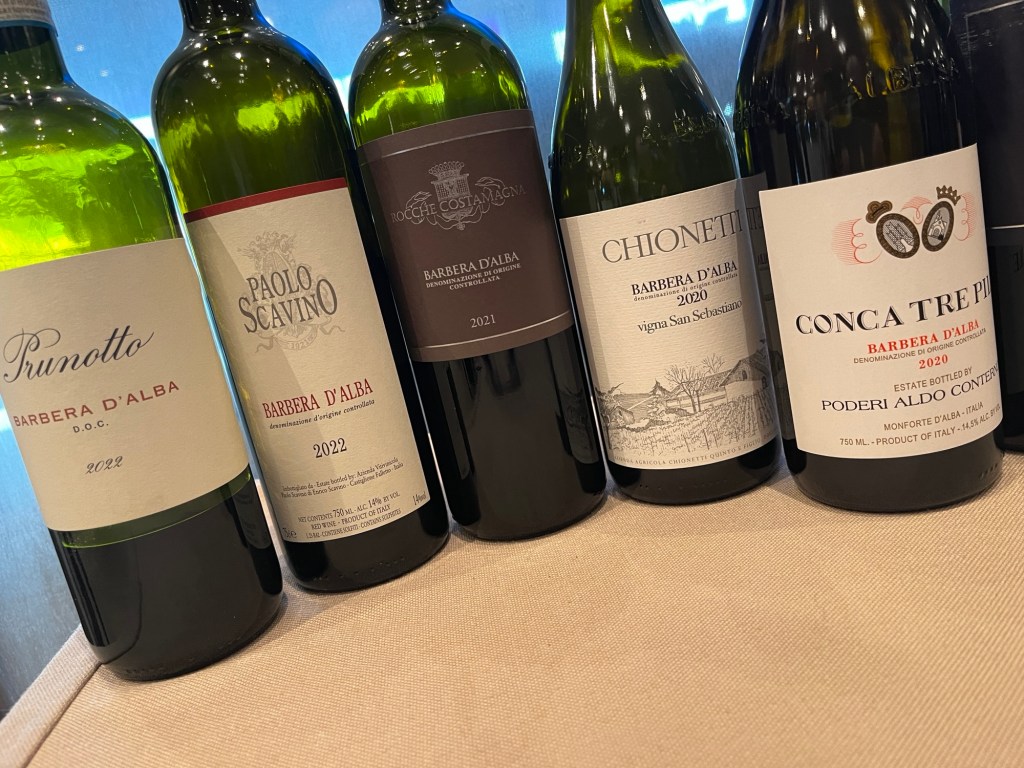
Prunotto Barbera d’Aba 2022 $40
Bright red fruit, classic bright fruit. A mid-palate style – even, juicy, minimal oak, with glacé red fruit and simple raspberry classicness. It’s an entree wine, but attractive and even a little understated. Straightforward, but genuinely attractive drink. 16.8/20, 89/100.
Paolo Scavino Barbera d’Alba 2022 – $41
From a vineyard that faces east, which Andrea thinks helps retain freshness. Alcohol in this is 13-13.5%, whereas on the western side, it can be half a degree more. 6-8 days maceration and everything in stainless, with 5-6 months in tank. 2022 was a very warm vintage and very dry. The lowest-ever rainfall with 185mm. 15-16,000 bottles produced. ‘Marl soil is the one that performs for Barbera’.
A whole basket of joyous red fruit. A joyous wine. Great acidity – it’s uncomplicated, juicy, with little tannins, and more about primary fruit. Fresh finish, not firm in any way. Good simple drinking – really lucid raspberry Barbera juiciness. 17/20, 90/100.
Rocche Costamagna Barbera d’Alba 2021 – $38
Alessandro started almost 40 vintages ago. Thought the 1990s were ‘very wet’ vintages. He once leaf plucked, but has changed that to try and get more shade to protect the fruit. Planting density has been lifted from 3500 to 5-6,000 vines per hectare. Nebbiolo harvest in 1980 was in early November after the first snow. It is closer to late September/early October in the last five years. Barbera d’Asti is 7-10 days earlier harvest than Barbera d’Alba. The Barbera harvest is typically a week or so before Nebbiolo. 1/3rds of this is in barrique, the rest in tank. ‘We’d like to have a vintage like 2021 every year’. ‘The perfect ripening time’ ‘All the wines in 2021 have excellent acidity’.
It was slightly skinny and a little reductive at first – I was half expecting this to be under a screwcap. Tinned red fruit, very even-handed and refreshing sort of palate, little oak, but clearly more oak than the Scavino. Very drinkable, if a little raw. Bright fruit, though. This grows on you – a little bit more tannins in this lineup (some oak tannins), and the back end is quite delicious. 17.5/20, 91/100.
Chionetti Barbera d’Alba Vigna San Sebastiano 2020 – $43
Organic producer, all old oak. Only 5,000 bottles produced.
Although it’s a deeper, darker wine, it has more of that tinned cherry fruit character. There is some dried fruit, a flash of animal meatiness (Brett?), and toasty roasted coconut oak. Although hearty, I see this as a bit raw; it’s less graceful. 16.5/20, 88/100.
Poderi Aldo conterno Conca Tre Pile Barbera d’Alba 2020 – $95
Harvested in early October, a few months in steel, then a few months in oak.
Sweet vanilla oak all over it. There’s lovely red fruit in there, but it’s mostly all about sweet vanilla bean oak. I can’t get past it – high-quality oak, but it’s hard to see the fruit. Were the few months in 100% new wood? 16.8/20, 89/100+
Flight 2: The gateway to greatness – the role of Langhe Nebbiolo

Alessandro: Usually (we are) using barrels that aren’t toasted for Nebbiolo. New clones of Nebbiolo produce bunches of just 250g, compared to the old clones, which could have 1kg bunches. 1.2kg of fruit per vine. Alessandro is planting with the Michet clone. The first green harvest is in July, and another in the middle of August in some years. With that many green harvests, he is less worried about sorting. ‘When we setup a new vineyard for Barbera it is three years, for Nebbiolo it is four years’.
‘Nebbiolo needs to grow to 2m (from the ground) to get enough sunshine’. Alessandro has started using hail nets to protect grapes and leaves. The first part of the summer is dangerous for hail, though, and more hail than snow so far in 2024. Last year on July 4th a 7 minute hailstorm caused dramatic damage in Roero with vines cut in half!
Rocche Costamagna Langhe Nebbiolo 2021 – $42
From La Morra. ‘We decided to grow Nebbiolo above 400m’ (which doesn’t normally happen as it’s too cold). Now, it has 4ha and produces really well in the hot years (AL).
Cherry fruit. Lovely finessed tannins. A structured rather than generous wine with graceful tannins. Not immediate at all. Maybe a little light? Rather pretty really and polished with these sandy tannins. Smart; I may be underrating this. 17.7/20, 92/100.
Chionetti Langhe Nebbiolo La Chiusa 2021 – $72
Just a little confection in the glacé cherry fruit. Cascading tannins, glace flavours, and just a little meatiness are here, but it’s not Brett; it’s more of a tilled earth character. Quite a tannic grip. I like this – it feels substantial for a Langhe Nebb, even if it’s not exactly pure. The tannins are grippy and open-knit 17.7/20, 92/100.
Paolo Scavino Langhe Nebbiolo 2021 – $58
La Morra is from two plots with a west- and east-facing aspect.
High-toned, pretty, slightly confected, fresh red fruit, lively tannins. A pure, maybe less complex Nebbiolo expression with a fresh rather than driving finish. Very pretty and very drinkable. 17.5/20, 91/100.
Prunotto Occhetti Langhe Nebbiolo 2020 – $48
The colour is more trademark Nebbiolo—a little bricking. It is firm, framed by tannins, and the fruit is glace plum and stonefruit. Tannins are already starting to take over this, drying out. It’s not unattractive, but it could do with more fruit. 16.8/20, 89/100.
Poderi Aldo Conterno Il Favot Langhe Nebbiolo 2020 – $136
Monforte d’Alba fruit.
Lovely perfume. Ripe cherry, ripe red fruit, oak tannins. Has a little of the tarry orange blossom Nebb classicness and some grunt to it. Rather powerful and a bit chewy. Feels like the more tannic declassified barrels. It’s pretty classic, though. 17.5/20, 91/100+
Flight 3: An overview of the Barolo DOCG
Castello di Neive Barbaresco 2020 – $126
One of the first to produce high-quality Arneis in Neive. This and the wine below are fermented in stainless and matured in large 3000-litre oak.
Smudgey tarry rose nose. Tannin forward, graceful, with chewy caramel oak tannins punching through. Savoury feels rather classical in a terry, tannic, dusty style. Graceful. Very drinkable and even, plus a little tarry. I like it. There’s this lift of cherry fruit that makes it more approachable than the gruff Barolo wines below. 17.7/20, 92/100+
Castello di Neive Barberesco ‘Santo Stefano’ 2020 – $186
A plot within the Albesani MGA. An old Giacosa vineyard.
This is probably the best wine in the bracket. With tarry, chewy red cherry flavours, it has the missing element of the standard wine—a flourish of tarry orange and dusty red fruit. A little more oak sticks out here, but the savoury grace is excellent. Charisma in droves. 18/20, 93/100.
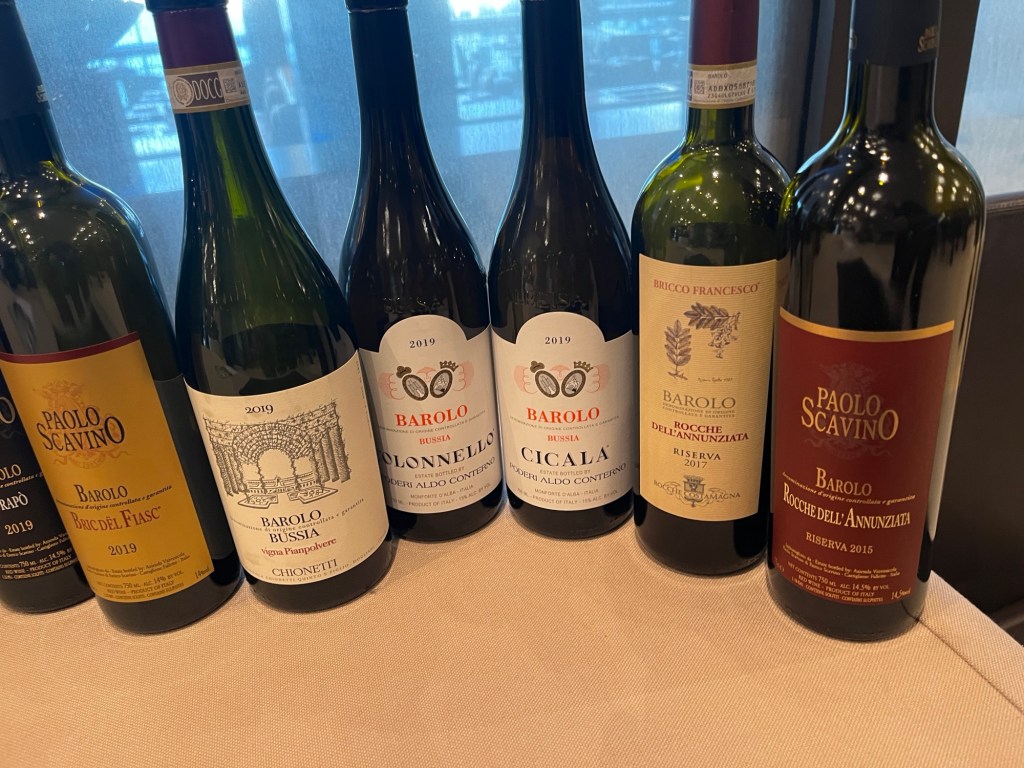
Rocche Costamagna Barolo 2019 – $89
‘I consider 2016, 2019 and 2021 as the best vintages for the area’. Very classic winemaking. Fermented low temp (26C) in tank and then wood. ‘A real expression of the Barolo’ says Alessandro. From 2021, this will be exclusively from La Morra; now, it has some Verduno fruit. All large Slavonian oak 18-20 months, in 2-3,000L in oak (AL).
Closed nose. Mid-weight, classic savoury lines – a distant relative of modern flashy Barolo. Some earthy coppery glace cherry fruit, but its savoury wine. A grower, perhaps, very classic and chewy but also a bit uncompromising. Kinda graceful, though. Very nice (and seriously well-priced). 18/20, 93/100.
Paolo Scavino Barolo 2019 – $113
‘The historical way to make a Barolo’ for this says Andrea. From nine vineyards, covering five of the six soil types in Barolo. 34 plots picked at different times. Spends 3 weeks on skins. Some plots get vinifed in oak. Some in steel, then the finished wine is matured in large, older oak.
Very pretty. Fragrant, there is almost a cut melon and kirsch prettiness to this, and the tannins are light-touch. Still very classical – tarry, chewy (in a proper Nebbiolo way), but with a lightness of tannins. Maybe not the drive and bite? It’s a pretty wine. 17.7/20, 92/100.
Poderi Aldo Conterno Barolo 2019 – $254
From Montforte d’Alba.
Oaky, again, but it becomes part of the furniture—great tannins, but also oak tannins. The pithy, sawdust and sweet caramel oak add layers here but they’re oaky layers. Nowhere near ready. The oak is unnecessary. It’s still very long and classy, but man, that oak is a distraction. 17.5/20, 91/100+
Flight 4: 2019 – a classic vintage just starting to emerge
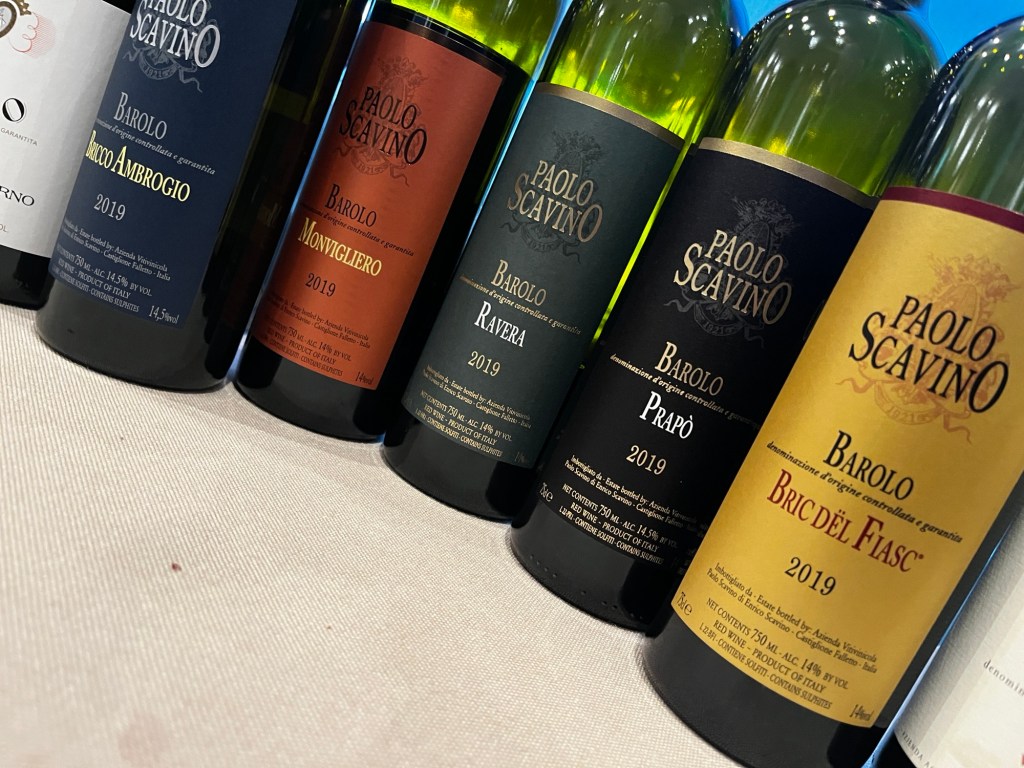
Paolo Scavino Barolo ‘Bricco Ambrogio’ 2019 – $171
From Roddi, with a big difference between diurnal temps – warm days, cool nights (AO).
Tight, there’s a little glace cherry escaping, but still tight. Lovely chewy cherry ferrous palate. It’s a more forward wine, chewy caramel and cherry with tannic grip. Expressive and open. Real sandy Nebbiolo grip. Maybe on the leaner side? Savoury first. Seriously grippy. 18/20, 93/100.
Paolo Scavino Barolo ‘Monvigliero’ 2019 – $210
From Verduno. From one of the most northern vineyards in Barolo. This vineyard was helped by global warming, and it was once one of the foggiest in the region. Chalky soils. Elegant tannins mark this.
Red licorice, licorice high tones. A cooked cherry, leathery earthen palate, and tannins are sandy, finessed, and polished. A bit of x-factor on the nose doesn’t quite transfer to the palate, but so classy. 18/20, 93/100+
Paolo Scavino Barolo ‘Ravera’ 2019 – $210
From Novello. The coolest vineyard in the Paolo Scavino plots. East facing, it never sees afternoon sun – can be 5-6C cooler than other vineyards around it. Licorice and mint and herbs.
Probably the most fruit-forward aromatics. It even looks the brightest. Grip, but it’s not a big wine, instead finessed, savoury, pre-pubescent. The tannins and the gracefulness make this a delightful- a linear wine of finesse. Magnificent! 18.7/20, 95/100.
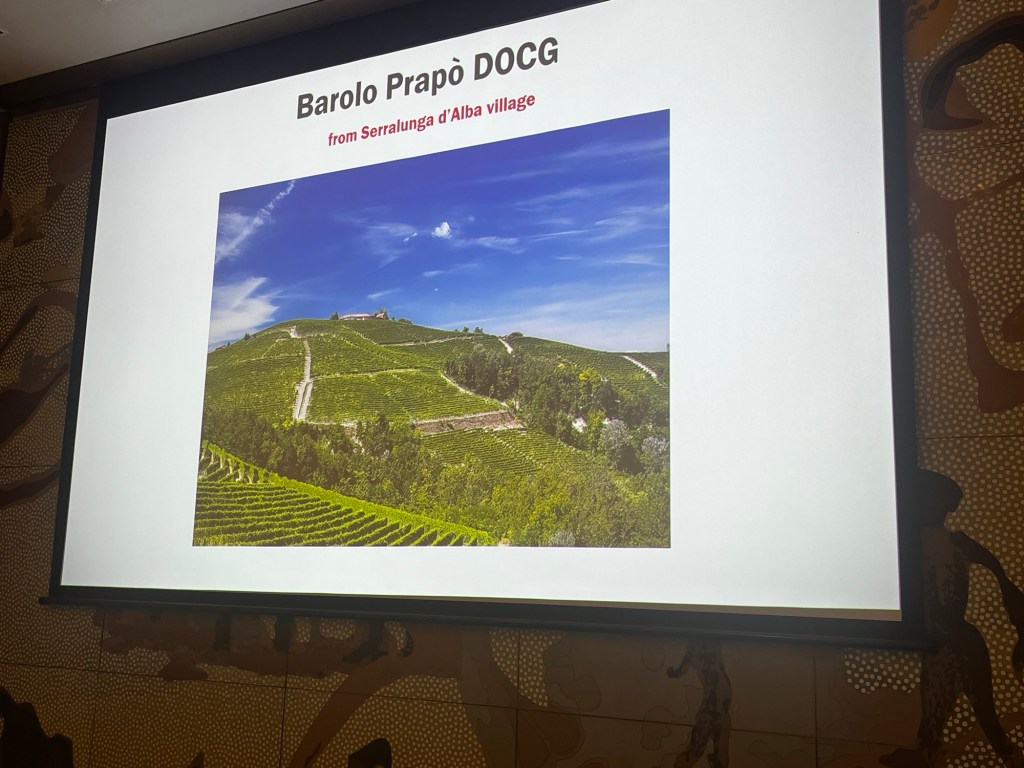
Paolo Scavino Barolo ‘Prapo’ 2019 – $210
From Serralunga d’Alba. From the eastern part of the Barolo. A 8ha plot shared between several owners. A very dry, south facing vineyard with sandy soils.
Glacé fruit, A real fruit basket with some berries too. A fleshy, purple, dark-coloured wine, it’s a big mouthful and so berried! It could almost be Grenache. A big Barossan red of Barolo. So very fleshy. Super fine tannins, though – it’s moderate, really. Pretty great but arguably too modern as well. 18.5/20, 94/100.
Paolo Scavino Barolo ‘Bric dël Fiasc’ 2019 – $264
From Castiglione Falletto. The most celebrated of the Paolo Scavino sites.
Coy. There’s a flicker of raisin and sweet soy, even flashes of licorice. This is the top dog – chewy, purple fruit, compressed and modern-looking. The tannins here feel more modern, and it’s a powerful, unfurling wine with mystery and power. Pretty great. A real flagship! 18.7/20, 95/100.
Flight 5: A close examination of some of Barolo’s great sites
Chionetti Barolo ‘Bussia Vigna Pianpolvere’ 2019 – $188
From Bussia in Monforte d’Alba.
Wow. Great expression. It really jumps out of the glass with its fresh cherry fruit. There is some new wood here, and it shows. It’s softer, sawdusty, and a bit simple by comparison, but with the caveat that it’s also fresh and powerful and very youthful. Will live forever, even if it’s less classic and a bit spiky. 18.5/20, 94/100.
Poderi Aldo Conterno Barolo ‘Colonnello’ 2019 – $453
From Bussia in Monforte d’Alba. The Michet clone here too.
Very modern smells. Coconutty oak, slicks of sweet vanilla icecream and then the same through the finish. I can’t surmount the oak. It’s a disappointment. Clearly high high-quality wine below the Vanilla/caramel thickshake, but forest for the trees (and the alcohol). 17.5/20, 91/100+
Poderi Aldo Conterno Barolo ‘Cicala’ 2019 – $453
From Bussia in Monforte d’Alba. Uses Lampia clone.
The oak isn’t as dominant here, even if its the main character. Vanilla ice cream oak, some cherry fruit roaring up behind and then oak etched tannins. I can appreciate this more – there are all sorts of dark caramelly shades to it. Super smooth. But why so overwrought? And 15% alcohol as well? 17.7/20, 92/100+
Rocche Costamagna Barolo Riserva Rocche dell’Annunziata ‘Bricco Francesco’ 2017 – $178
From La Morra. ‘The heart of our property’. Alessandro sees a little mint and balsamic in this wine.
Much better. Glace raspberry fruit, some mushroomy development and a leafy personality. It’s savoury, firm, and long – it just goes on and on. It may not be as convincing as the 2019 wines, though – this is a bit sweet, sour, and mulchy (hello, 2017 vintage). Still super long. The finish really makes this autumnal style – great mouth-closing grip. Quality. 18.5/20, 94/100.
Paolo Scavino Barolo Riserva Rocche dell’Annunziata 2015 – $481
From the same plot on La Morra as the Costamagna. Who wore it better?
Kirsch, still lots of fruit. Powerful and closed, still. It’s a black wine, a withering, purple-edged red of extravagance – you can see loads of the high-toned fruit despite the age. A licoricey, black fruit core and the tannins are so grippy. Very, very impressive. 18.7/20, 95/100.


Leave a Reply