
After three days of wine show judging (and three days of wine dinners) in Canberra for the 2024 Winewise Championships, my tongue is black, my teeth are sore, and my guts are complaining.
But it was worth it.
By the third day of full-time judging, you’re seeing wines like beachballs – they bounce on in and you see all the flaws/glories. You sit down, taste through lots of wines – circa 15 brackets of young Australian Shiraz on the last day – and you just look for the specialness.
It’s that easy!
Except it’s not easy at all.
What is easy is complacency. With large brackets of similar wines, you can find yourself scoring certain wines higher/lower just because they taste different – some whole bunch spice in a Shiraz here or especially sexy oak in a Cabernet there. The hard part is to go beyond that eye-catching element and look for structure – the extra intensity of flavour, length, tannin balance, and all that. Judging then becomes mentally challenging as you have to really concentrate, while your mouth/tongue/teeth slowly scream at you (my tongue gets especially swollen and raw)…

It’s still worth it! Wine shows in Australia, where we talk about results (and often argue about them) while judging, force you to become focused on wine structure, not just flavour. Then, on the tasting bench at home, you look beyond the initial flashy deliciousness in a quest for real substance.

The other thing I like about wine shows is that they’re great calibration exercises, where you can see wine fads (much less oak in lots of recent vintage Shiraz, for example) and also what other judges think is a benchmark (even if I don’t agree). As someone who mostly tastes solo in my kitchen, different perspectives can feel like a breath of fresh air, especially when fellow judges aren’t a-holes. We all learn something, find the good wines, and then go out for a drink afterwards.

We definitely drank well on my final night in Canberra too. The modern Middle Eastern/Greek fusion of Med in Barton was excellent (would go again), with only the moody lighting (that makes my typically pretty average photos look especially average) to contend with.
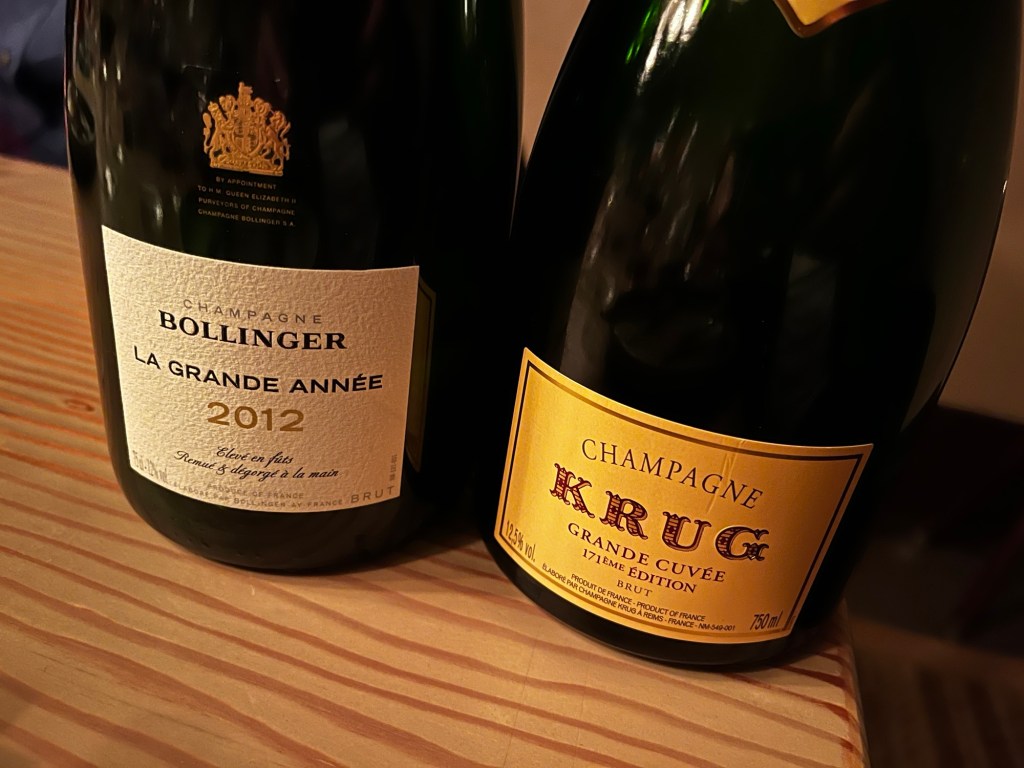
This big dog Champagne duo was an especially great way to celebrate. The Bollinger La Grand Année 2012 really does feel grand, with its Pinot dominant muscularity a counterpoint to the rich-but-coiffed Krug Grand Cuvée 171ème Édition. Both these wines are in my wheelhouse, as oak-influenced and more mouthfilling styles (much more so than the aperitif-mode Dom Perignon, which just looks underdone by comparison), but the Bollinger was especially powerful and complete, while the Krug was tighter and more pointed. It will surprise exactly nobody that I snuck in an extra half glass of each (nobody else was going for seconds!) after some of the other reds, and coming back, brought into sharp relief how bloody delicious, really, really good Champagne tastes. Every (small) sip, these wines looked different, at some points green fruited and tight, the next, leesy and custard creamy, and always refreshing. It’s like a super hi-res photo where every time you pick up a new detail, a new take. The great wines do that – they change. They have light and shade, always reminding why wine is more than just fermented grape juice.
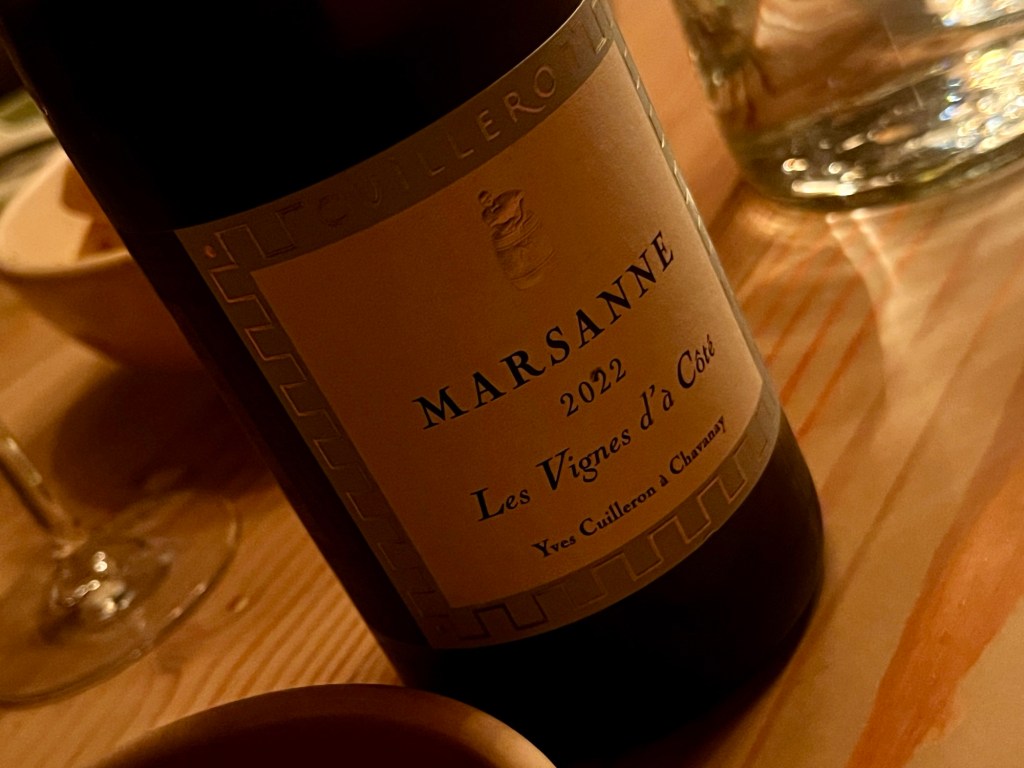
There were a few bottles of Cuilleron Les Vignes d’a Cote Marsanne 2022 to follow, which weren’t as memorable (nor was my photo), but then the red of the night, a magnum of Pierre Gaillard Saint-Joseph 2020 lobbed up. A seriously sexy Syrah, the Gaillard was a reminder that I bloody love northern Rhone reds. Perfumed, gently spicy, with that red fruited mediumness that almost makes it feel like peppery ripe Pinot. It’s not (contextually) expensive wine either, and certainly delicious. In fact the only letdown is my shoddy photo (since deleted), which looks like I had slipped over while taking it.

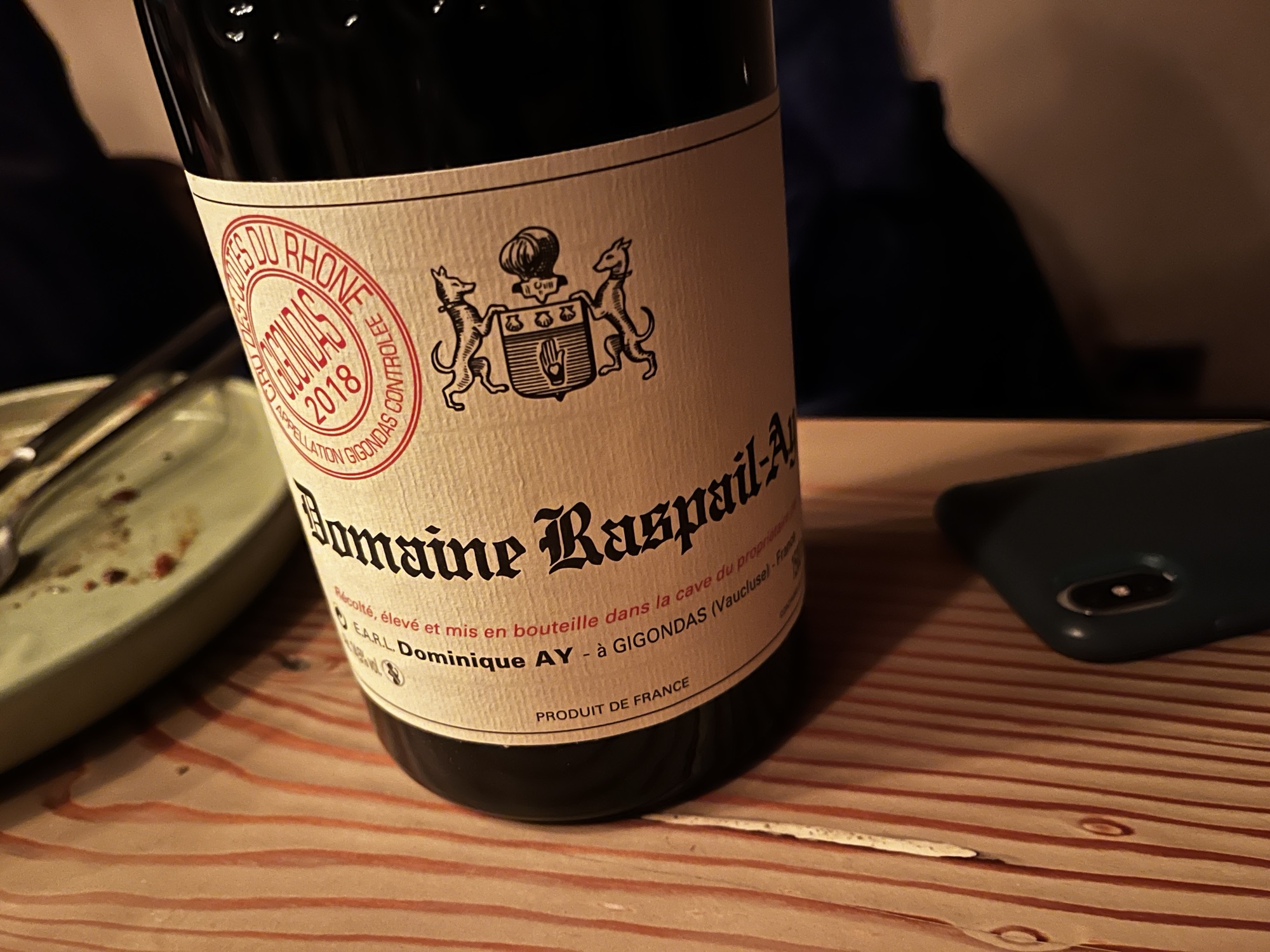
I thought the Raspail-Ay Gigondas 2018 (above, from magnum) looked a bit featureless after that Saint-Joseph delight. It’s sweeter, rounder, full of rich flavour, but also a bit of a single tone – as if the Grenache was the only flavour running the show.
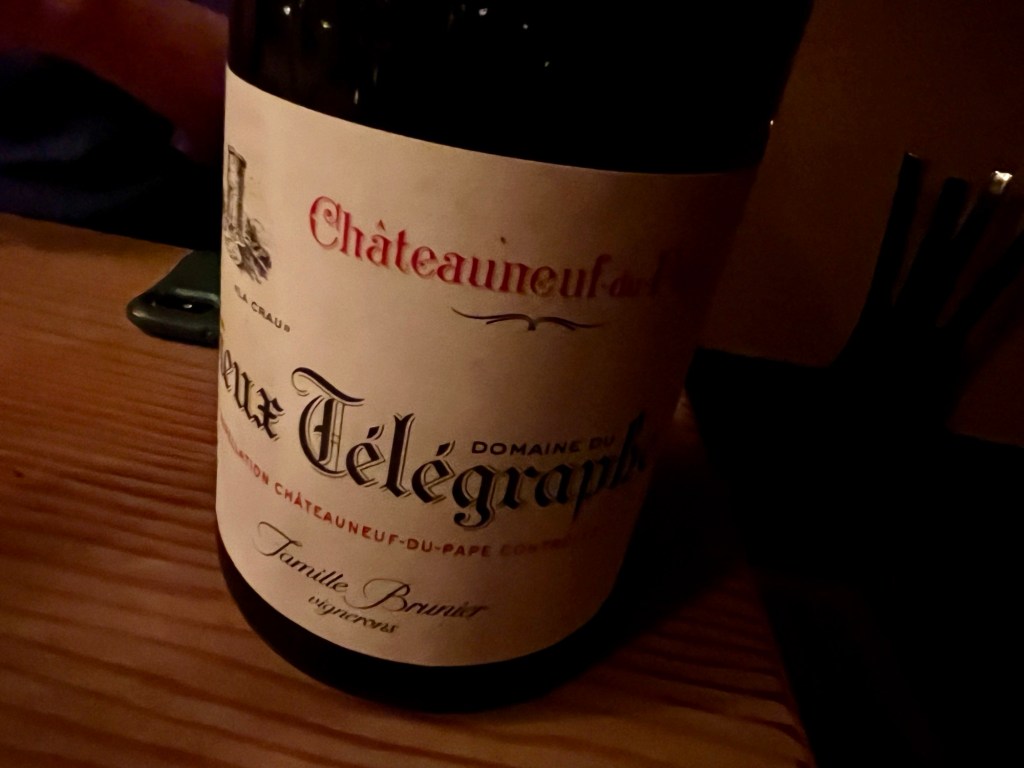
Finally, the Vieux Télégraph 2016 (from magnum too) was expected to be red of the night, but nay. It’s soft, fully mature, and would probably have looked more sexy served on its own, but the dusty, glycerol-rich cherried vibe lacked the spice and detail – more mature Aussie GSM rather than grandiose Chateauneuf-du-Pape. Certainly silky, but also a meaty red flow of glycerol-rich ripeness. No brett, though, which is a win for this label.
And that’s where it ends. Judging done, it’s hometime and back to a mountain of cheap wine samples to bring me down to reality. ’til next time Canberra!

Leave a Reply