
Up for a little swim in the unicorn end of international wines?
Blue-chip Australian importer Bibendum had a ‘special tasting’ this week that went deep into a world of mega wines and fancy, expensive things. This is the sort of tasting where, even though I was wearing my trade hat, I could feel my Amex quivering in my pocket for a pre-Christmas hit.
Let’s take at a few bank account drainers…
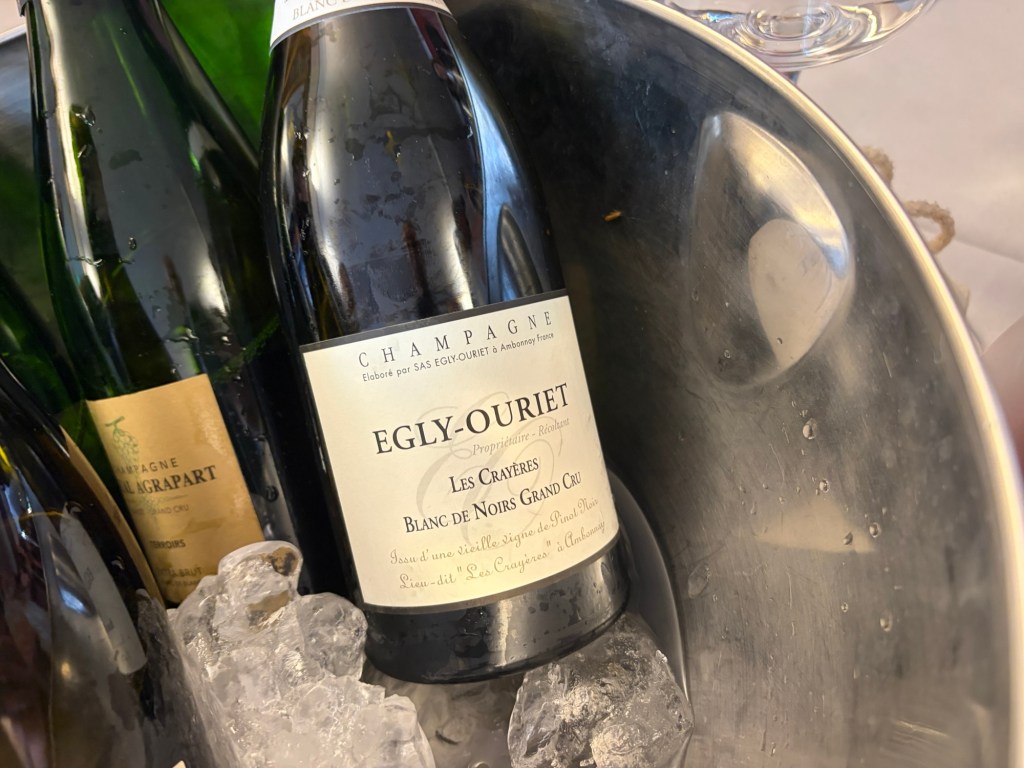
Champagne Egly-Ouriet Les Crayères Vieilles Vignes Grand Cru Blanc de Noirs NV
This is based on the 2017 vintage, disgorged in 2024. It’s incredibly detailed, extra-powerful, and vinous, a slightly too-serious Champagne that shows the glory and phenolic constraints of a Blanc de Noirs. There was an even more fancy Champagne Philipponnat Clos de Goisses Juste Rosé 2014 alongside which looked rather simple compared to this ultra-detailed fizz. I didn’t write down any scores for these wines, but this would be a 95 or even a 96-point wine that I’d love to digest a bottle for an intellectual experience, even if it’s now a circa $900 experience. Someone buy me some.
Champagne Larmandier-Bernier Terre de Vertus 1er Cru Blanc de Blancs 2017
This was a highlight at the winery last year, and in this company, it looks like a relative steal. A more forward BdB in some lights, as befits these 2017s (apparently a random bag of a Champagne vintage with frost and heat and botrytis), but it’s also expansive and generous without losing shape, and proudly reflective of place and winemaker. This is my Champagne wheelhouse, and if we’re playing scores, 95 points no probs…
Verget Pouilly-Fuissé Le Haut de la Roche 2024
In Burgundy earlier in the year, I called out just how impressive the ’24 Pouilly-Fuissé wines looked, and here is more evidence. Some of the 2024 white Burgs from further north look a bit lean (and with no grapes), but it’s a more compelling vintage in the Maconnais. Anyway, this Verget is just lovely – there’s this interplay between ripe yellow fruit and a crystalline limestone acid profile that just feels, well, perfectly composed, in a quite tight and acidic, 1er Cru Chablis mode. This isn’t even an expensive wine, and blind, it would outpace many more fancied Burgundies.
Domaine Guffens-Heynen Mâcon-Pierreclos Tris de Chavigne 2023
I’ve had limited experience with this Mâcon unicorn producer, but again it’s not hard to see why they’re coveted with wines like this. Compared to the tighter and Chablis-esque cool-year Verget, this felt expressive, a grandiose white with layers of white and yellow fruit, a sort of swashbuckling intensity and a just-right oak-shaped middle. Grandiose stuff this, would be a 95-point wine on the Ozwinereview scale. Out of everything in this whole lineup, this is the wine I will be most likely to buy (also because I can almost afford it).
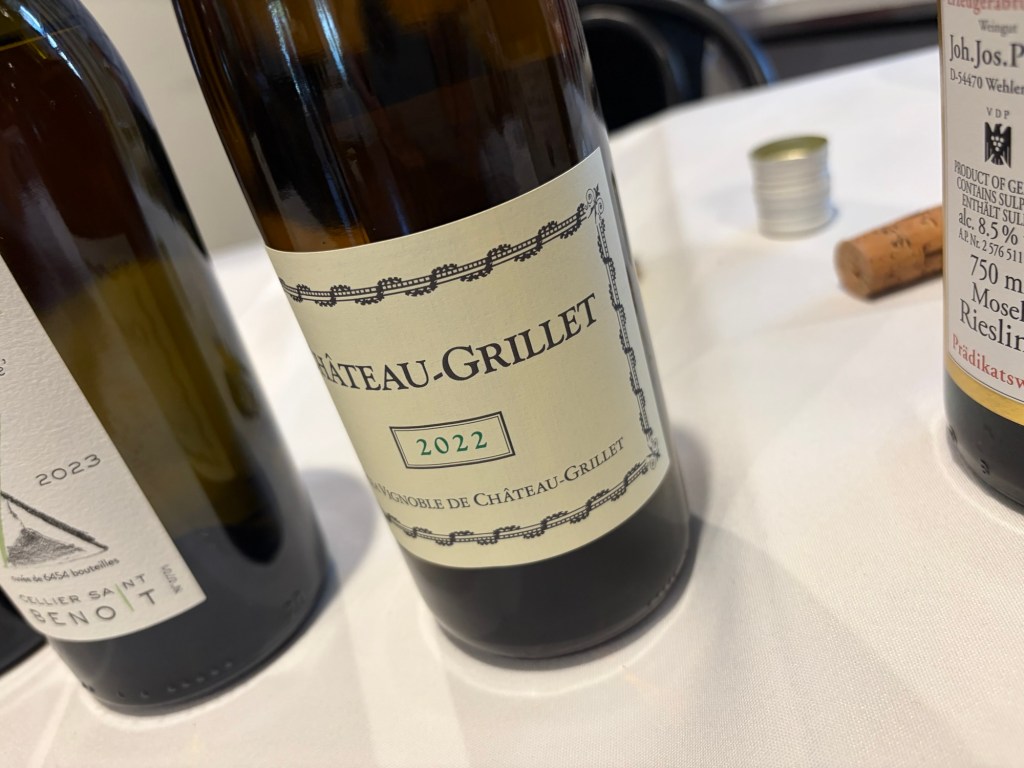
Château-Grillet 2022
The outlier of all outliers. A wine with its own AOC, and all about Viognier, with fewer than 10,000 bottles produced each year. It’s a fascinating wine too – 110% Viognier expression; the creamed apricot width is inescapable, with a low-acid viscosity that feels like stone fruit in syrup (but not sweet). You feel like you’re sipping the wine of royalty; such is the luscious power. It’s creamy too, with the oak filling in any holes that the yellow peach and apricot fruit misses. For all that, this isn’t perfect – the warmth nags at the finish, which is not unusual in some 2022 Burgundies and indeed Rhône whites, with that slightly stunted hot year phenolic dryness rather than flowing easily through the finish. The rest of the package, however, is superb, and I’d love drinking this, even if I can’t stomach the circa $1500 pricetag in any form.

Joh. Jos. Prüm Wehlener-Sonnenuhr Riesling Kabinett 2024
In the sweet spot. Literally. The Joh. Jos. Prüm Wehlener-Sonnenuhr Riesling Spätlese 2024 version was alongside this wine, and it looked far less drinkable, tipping over into slightly too sweet (at least for the moment) without being luscious enough to be small-glass dessert territory. But this Kabinett? Delightful. The juiciness and the just-right acidity make it feel playful and affable, with a little ripe mandarin and even peach fruit with a profile that is so obviously inviting that you can easily skip over that line of sour lemon acidity. A joyful wine that would disappear in my glass.
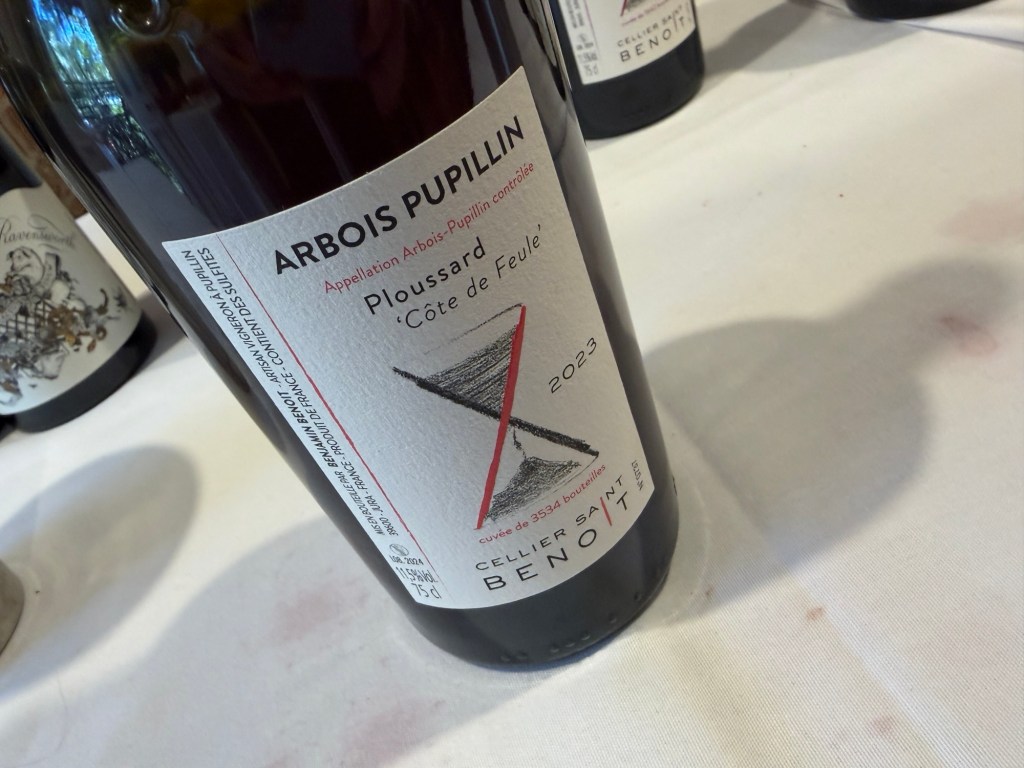
Cellier Saint Benoît Arbois Pupillin Côte de Feule Ploussard 2023
From a pint-sized plot in the Jura, and apparently bugger all made, this is the definition of ethereal. It pours a very light pale orange-pink, heading more towards rosé than red, with this fine-boned dried herb and appley/orange/alpine raspberry fruit expression that feels like it’s red wine washed in a mountain stream. A limpid wine of acidity, but not hard; it’s beautiful stuff and a delicious drink. Esoteric, maybe, but Jura in its coolest light. I could drink bottles and bottles of this.
Arnaud Mortet Gevrey-Chambertin Ma Cuvée 2023
Without labouring another point, the most drinkable Burgundy is often not Grand Cru at all. This red, a village wine in the hierarchy, was served up alongside the Arnaud Mortet La Perrière 1er Cru 2023 and the big dog Arnaud Mortet Mazoyères-Chambertin Grand Cru 2022, and I’d probably take the red-fruited joy of this Ma Cuvée over both (the Grand Cru wine was especially dense and a bit blocky). Sometimes the ’23 vintage Gevrey-Chambertin wines can be a bit foursquare, but this has brightness for days. A lovely Burgundy.

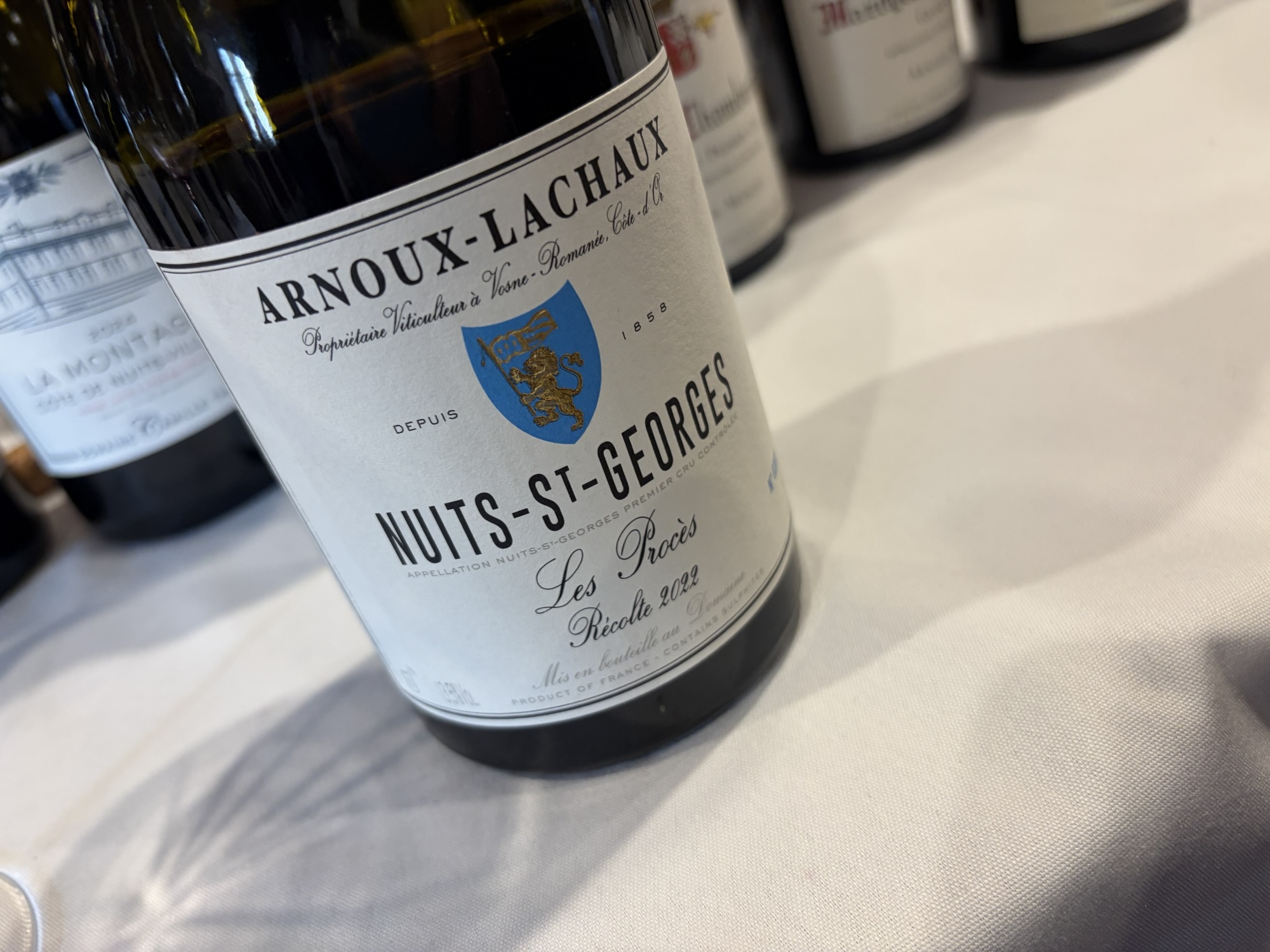
Arnoux-Lachaux Nuits-Saint-Georges Les Procès 1er Cru 2022
Now we’re getting into unicorn land, although not quite as rare as the Arnoux-Lachaux Échezeaux Les Rouges 2022, which was served alongside it. Uniquely, both of these wines were matured in sandstone amphorae for three years and feel like a very different red Burgundy experience. There’s a distinct, pithy, stemmy, peppery flourish to this more affordable (cough, $1400+ a bottle vs probably $3k) wine that is whole bunches making their statement, but then a palate that feels incredibly vibrant and lively, without losing the dark red/black fruit Nuits-Saint-Georges power. The Échezeaux is darker, and a long way off drinkable, with an even moodier fruit profile and all sorts of swirling mystery (in a Burgundy way) – it’s different, but I’m not sure it’s a step up compared to the 1er Cru wine. Compared to the Mortet above, these are hardly easy wines, but cerebral things for anoraks (like me).
Place of Changing Winds High Density Pinot Noir 2024
After tasting multi-thousand-dollar Burgundies, there’s always a risk an ambitious Australian wine served immediately will be overshadowed, but this release feels like a high water mark for Place of Changing Winds Pinot too. Rob Walters was on hand to pour this, and while he noted that being a vigneron is a love-hate thing when you wake up and realise how much work needs to be done every day, it’s a pleasure to see the wines in bottle. There is bugger all of this 2024 release after some poor flowering, but it’s seriously smart – a wine of cherries, red and black, with this flow of fruit that feels at once affable and yet deadly serious; the structure may be not quite as aggressive as the whole bunchy Burgundies, but well enough to be refreshing. A very impressive Macedon Ranges Pinot.
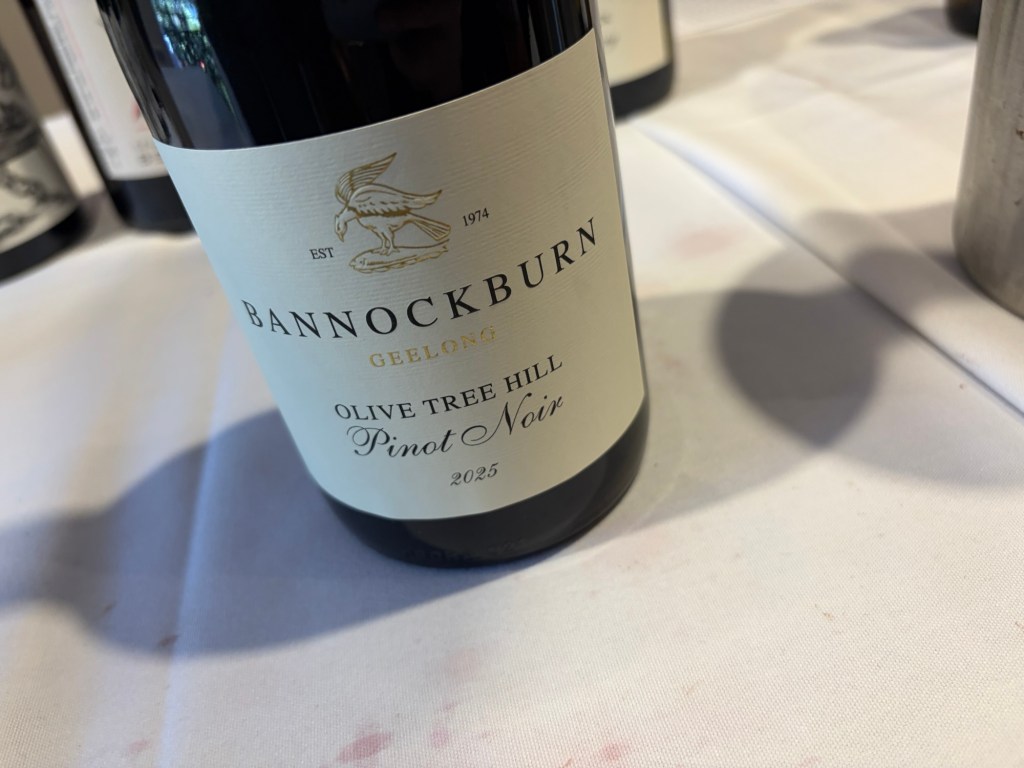
Bannockburn Olive Tree Hill Pinot Noir 2025
Another local interloper, but didn’t look wildly out of place in this company, either. Drawn from some of the original plantings, I haven’t seen this wine before, and it very much feels like Bannockburn essence. There’s a fleshy red fruit roundness here in that earth-meets-glossy red fruit estate character that is always appealing. Again, I have zero context about previous vintages, but there is a certain ’25 warmth here that makes it a bit primary too. Easily enjoyable, maybe not profound, but also has a site expression that is very welcome and a texture that is very moreish.
Massolino Barolo 2022
TBH, the Barolo is just the entree to this story, because really we’re talking about a bracket here, with the Massolino Langhe Nebbiolo 2024 and Massolino Barolo Vigna Rionda Riserva 2017 all in the conversation. Let’s start with the Langhe Nebbiolo, which somewhat defied my expectations given that some ’24 Piedmont releases tend a little lean and acidic (like the Ceretto here). This Massolino offering was quite refreshing though, with a light alpine feel, a little chinotto bittersweetness and plenty of brightness to it. Not quite the usual tarry mid-palate richness, but quite an enjoyable drink. The ’22 Barolo comes from another hard vintage too, with a very hot, very dry season making for wines that often feel blocky and less refreshing, especially compared to the fantastic 2021 (or the 2015 for that matter). I feel like Massolino bucked the trend a little here too, with a wine that is a bit more smudgy and new world-ish in its roundness, yet still quintessentially Barolo. I wish I could be as enthusiastic about the ’17 Vigna Rionda, though. I loved the 2016 big brother of this wine to bits, and the 2013 is a wonder, so I had high hopes (and indeed I have some of the other 2017 Massolino Cru wines in the cellar). But there’s a riserva oaky hearty forwardness here that I can’t shake – that reminder that keeping your best wines in oak for longer and releasing them later doesn’t necessarily make for more deliciousness (also called the ‘why Chianti Gran Selezione is often disappointing’ rule). Important to note it’s not a bad wine, but less would be more.

Leave a Reply